July 4, 2026 marks the 250th anniversary of the signing of the Declaration of Independence, which established the United States an independent nation. Events are taking place nationwide to commemorate the history of the American Revolution. This exhibition in the Stephen Richard Kerbs Exhibition Area in the Georgetown University Library draws from manuscripts collections about the American Revolution in the Booth Family Center for Special Collections.
The highlight of the exhibition is a broadside of the Declaration of Independence printed in Salem, Massachusetts in July 1776. A number of the items in the exhibition derive from the personal papers of John Gilmary Shea, the preeminent American Catholic historian of the nineteenth century, who acquired documents related to the American Revolution during the course of his research. Letters from George Washington; Ferdinand Farmer, S.J.; Horatio Gates; Baron von Steuben; and Anthony Wayne are included in the exhibition. In addition, a John Paul Jones medal and drawings of Benjamin Franklin and George Washington are also presented. The documents in this exhibition provide information about important events in the war for American independence.
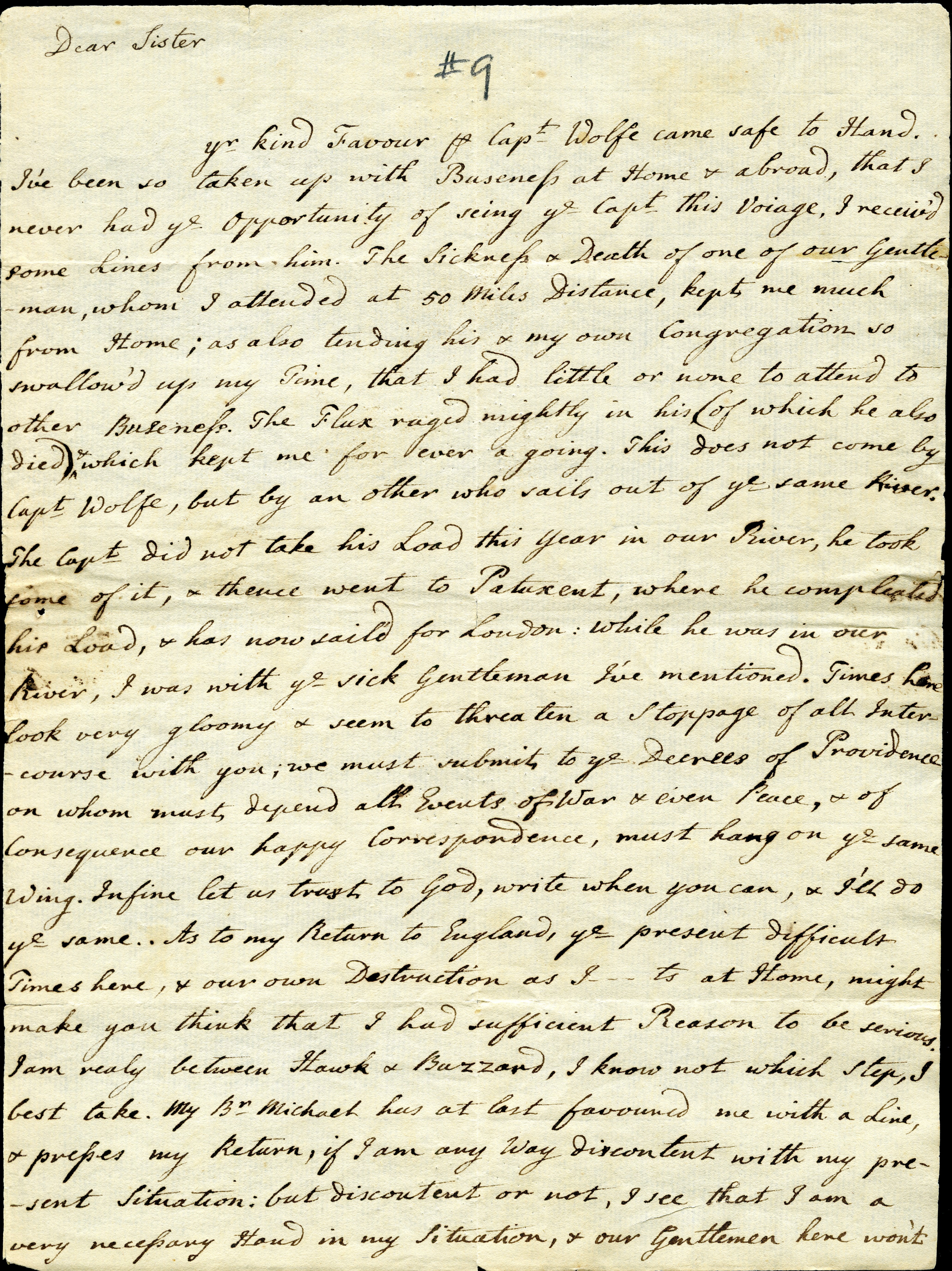
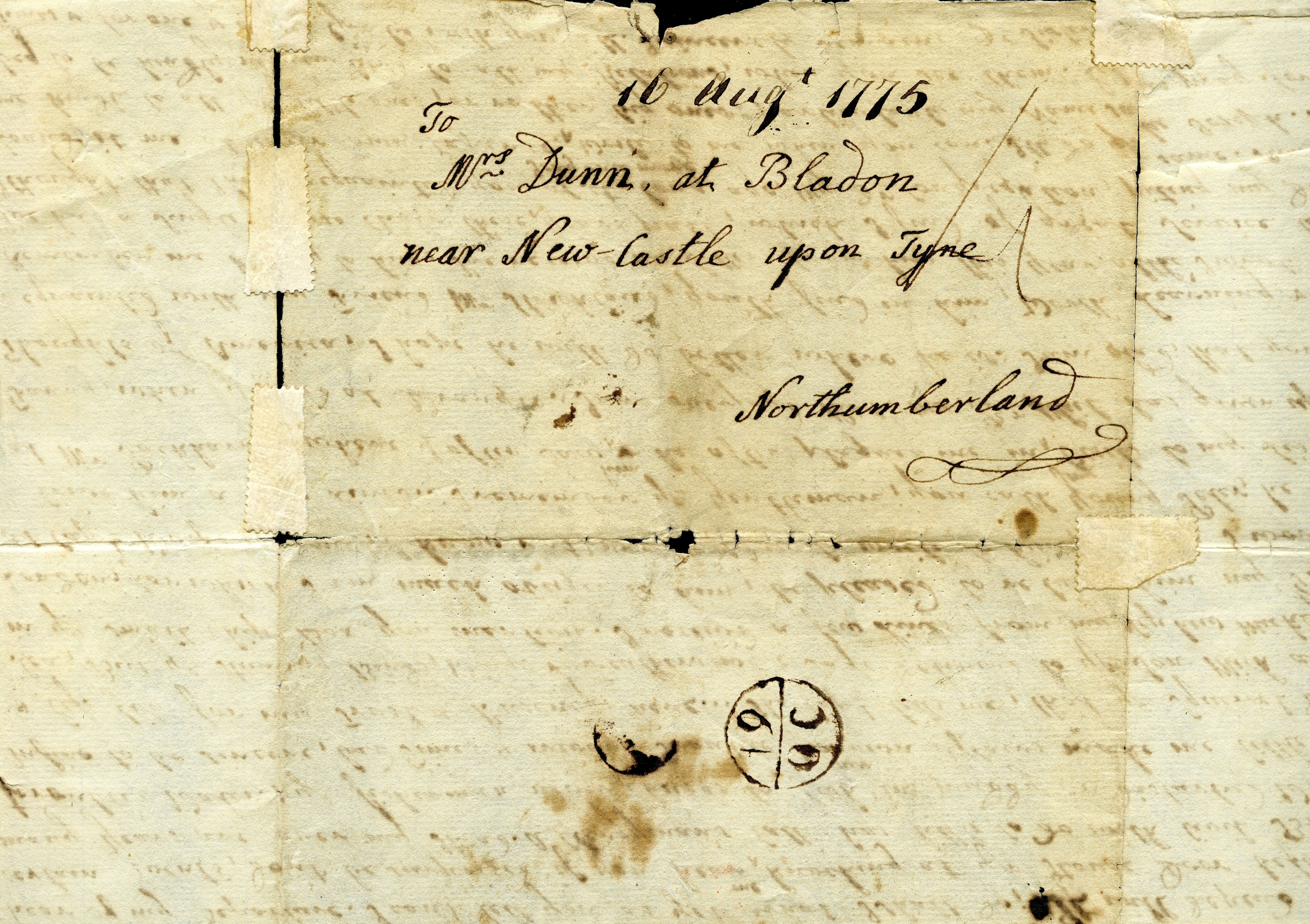
Letter from Joseph Mosley, S.J. to His Sister
August 16, 1775
Joseph Mosley, S.J. Papers
GTM-GAMMS25, Box 1 Folder 14
In this letter, Fr. Mosley, a Jesuit priest in Maryland, mentioned the upcoming war with Britain. His sister lived near New Castle upon Tyne in England. He feared that his correspondence with his sister would be interrupted in the case of a large war between the American colonies and Britain

Declaration of Independence Broadside
July 4, 1776
Salem Printing of the Declaration of Independence. [Salem, Massachusetts: Ezekiel Russell, 1776]
U.S. Declaration of Independence. In Congress, July 4, 1776. A Declaration by the Representatives of the United States of America, in General Congress Assembled. One of the earliest regional printings of the Declaration, this the "unofficial" (and probably earlier) of two Salem printings, and the only one presented in four-column format. One of very few known copies. Acquired by the University Archives from an undetermined source prior to 1970. A minimized reproduction of this broadside is on display in this exhibition.
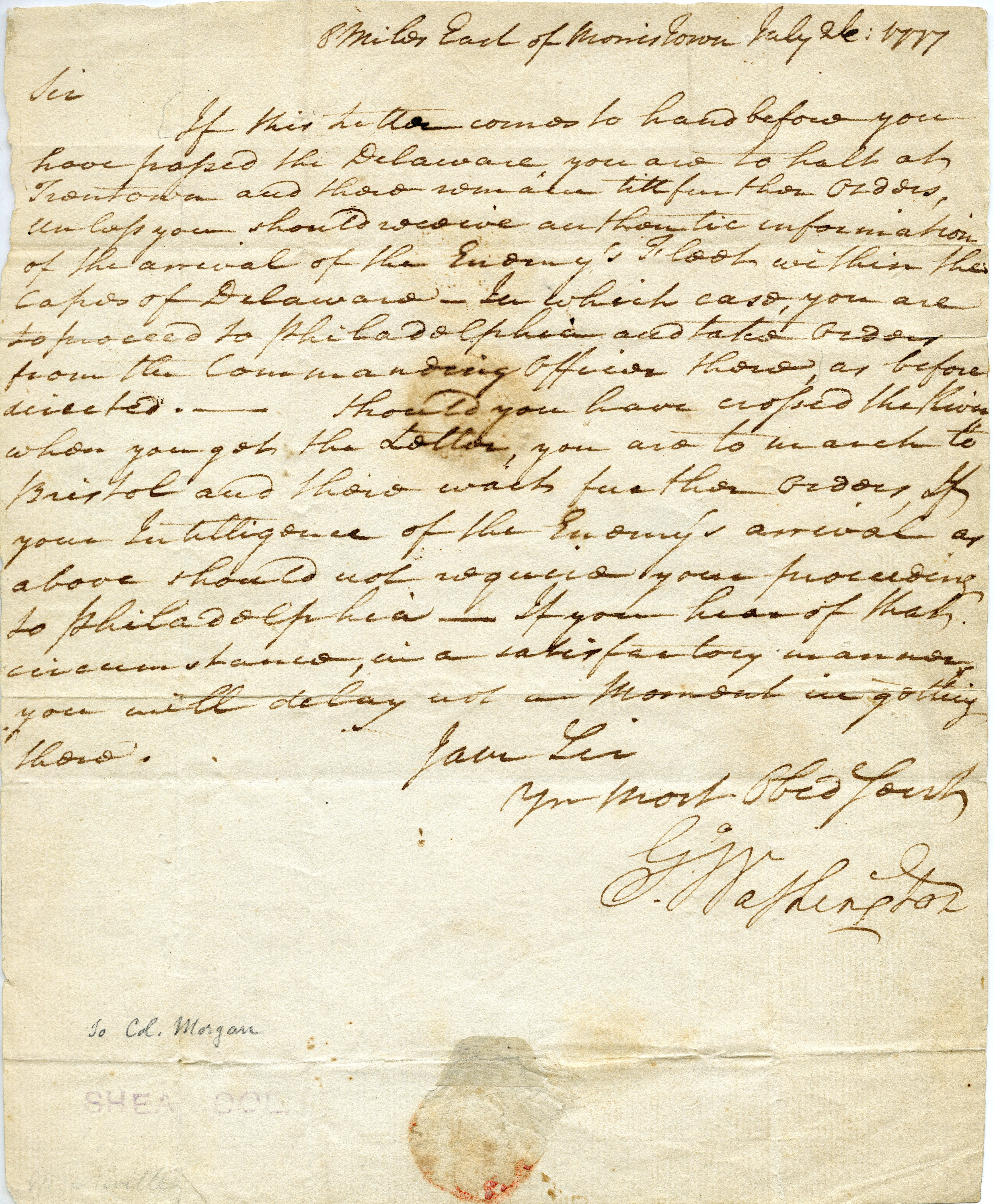
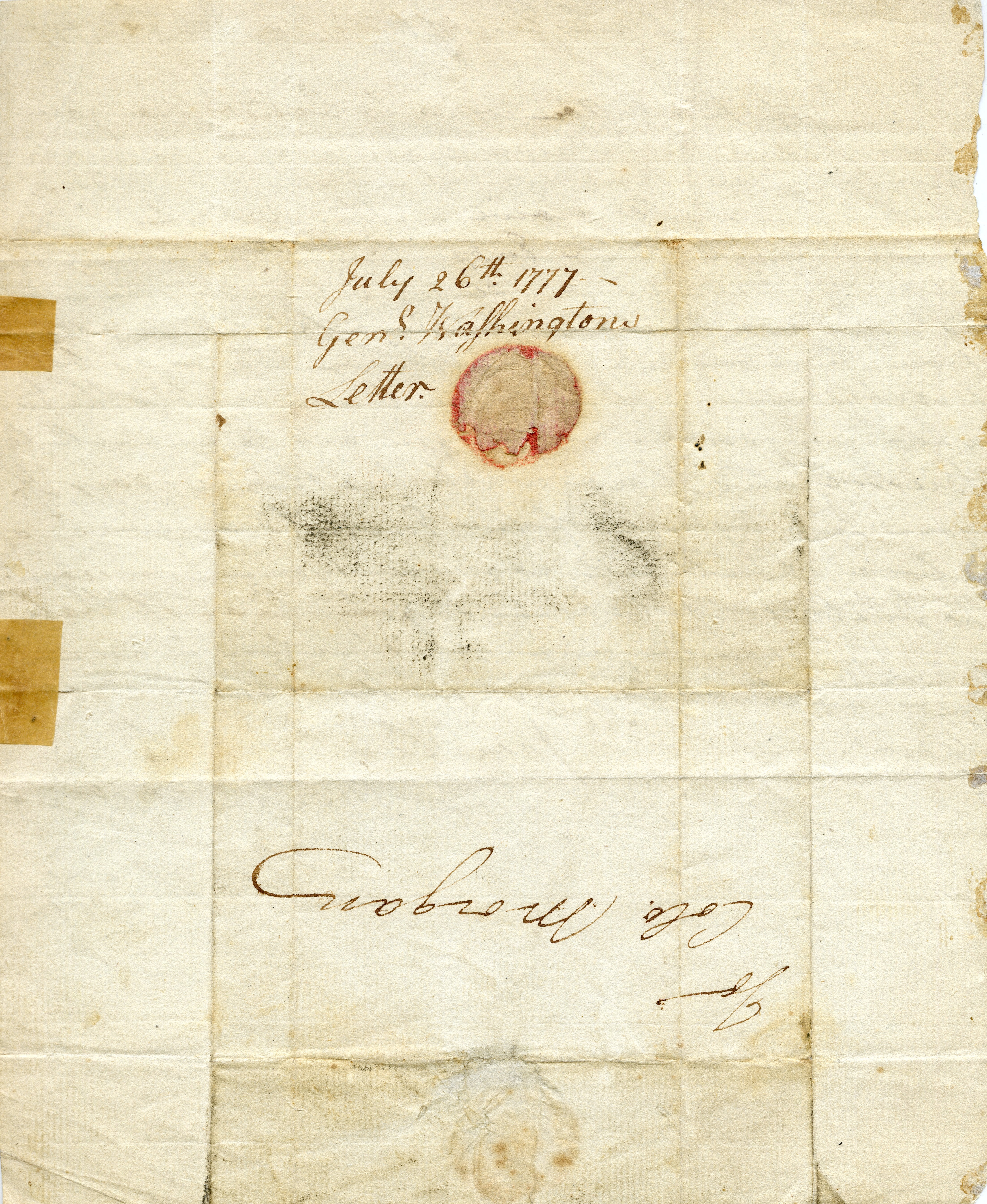
Letter from George Washington to Colonel Daniel Morgan
July 26, 1777
Presidential Autographs Collection
GTM-140212, Box 1 Folder 1
War-time letter from General Washington to Colonel Daniel Morgan, providing orders. If Morgan had not passed the Delaware River yet, he was to stop at Trenton, New Jersey. If Morgan had already passed the Delaware, he was to march to Bristol, Pennsylvania and await further orders. Sent from 8 miles east of Morristown, New Jersey. The letter bears the stamp of the John Gilmary Shea Papers. A reproduction of this letter is on display in this exhibition.
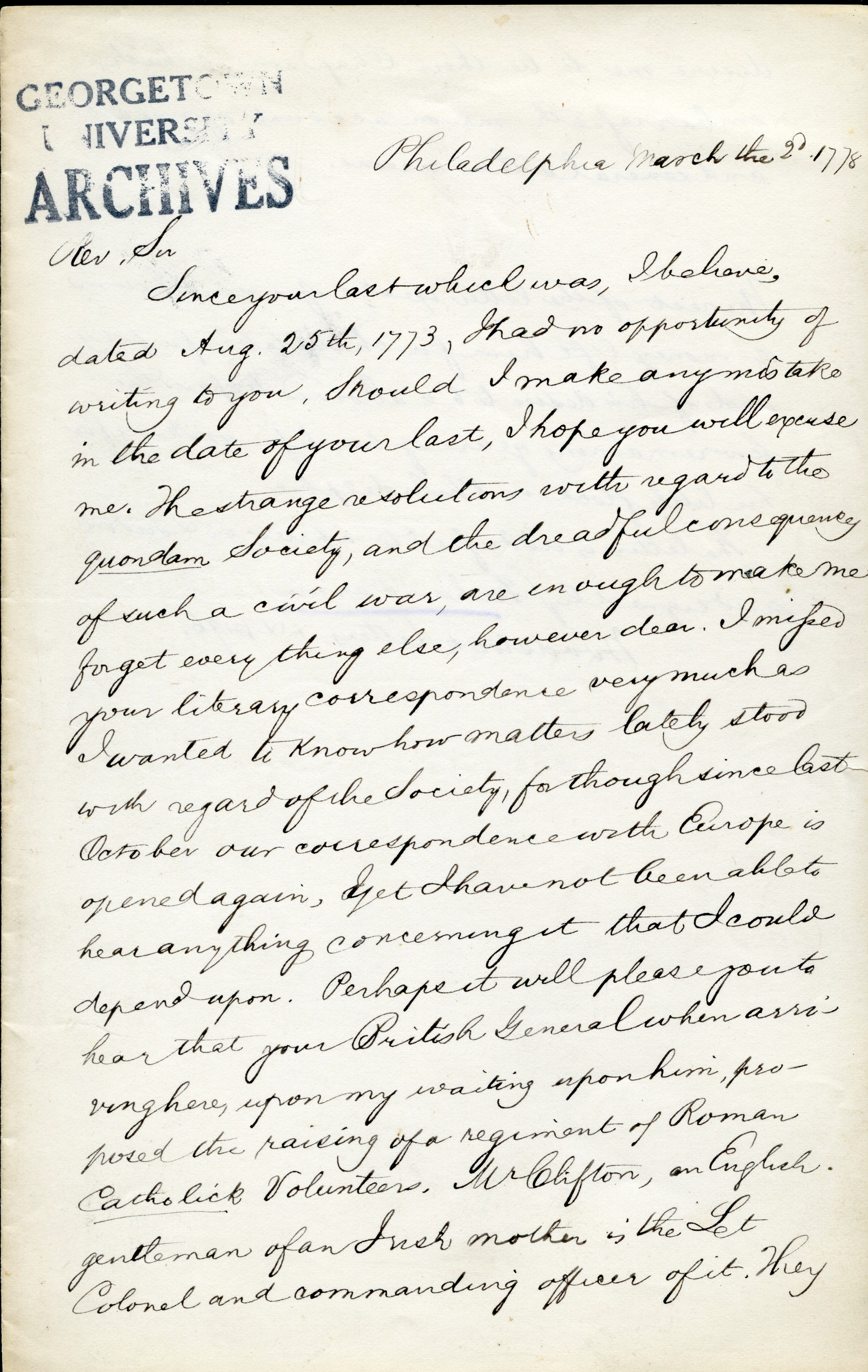
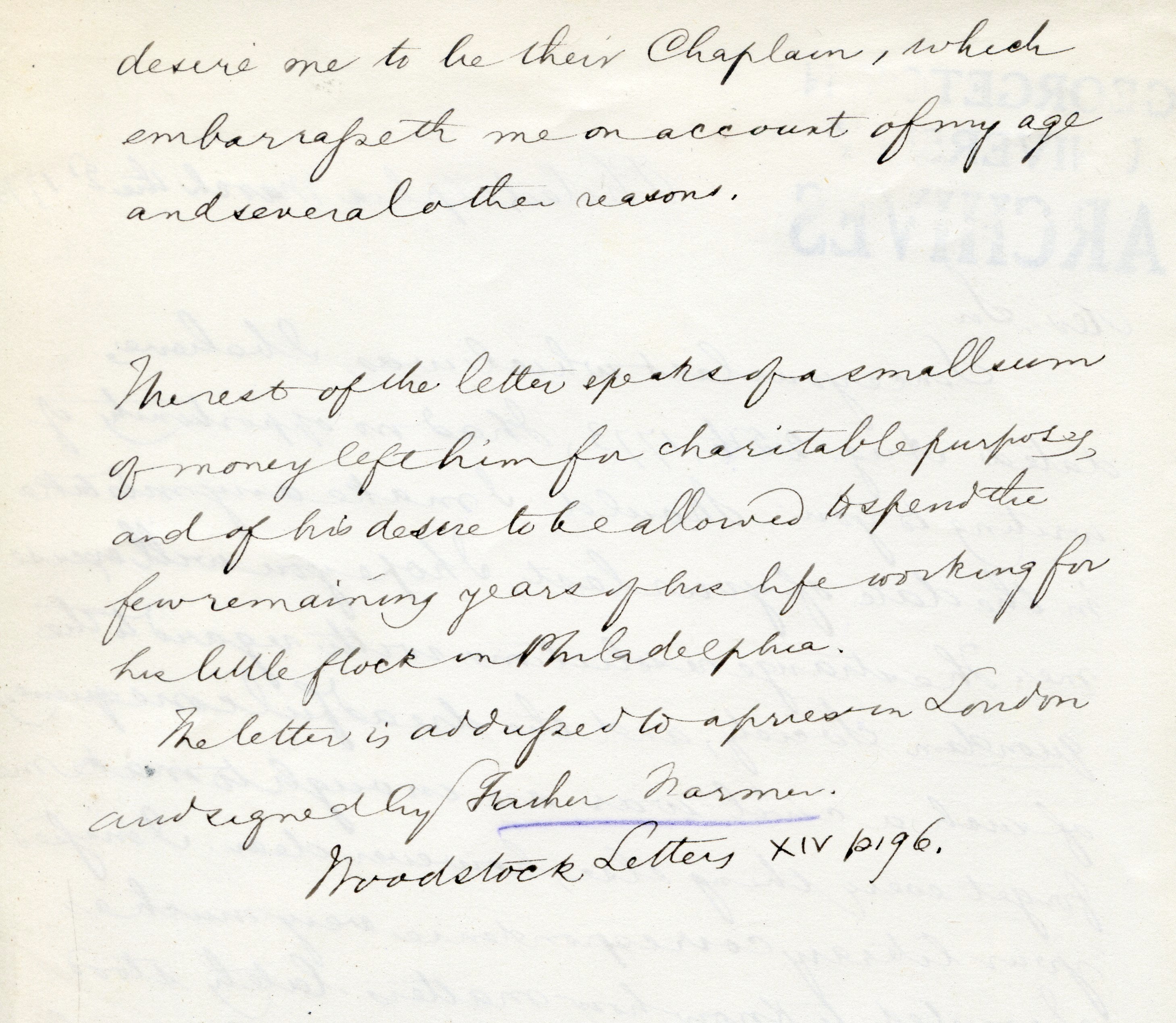
Letter from Ferdinand Farmer, S.J.
Letter
1778
John Gilmary Shea Papers
GTM-GAMMS269, Box 12 Folder 40
Transcript of a letter from Ferdinand Farmer, S.J. He mentioned efforts to organize a Roman Catholic Regiment to fight for Britain. Fr. Farmer noted that he had been asked to be the chaplain to the new unit, but he refused. Later, he proved his support of George Washington by signing an address to him in 1783. This letter was addressed to an unknown correspondent in Britain.
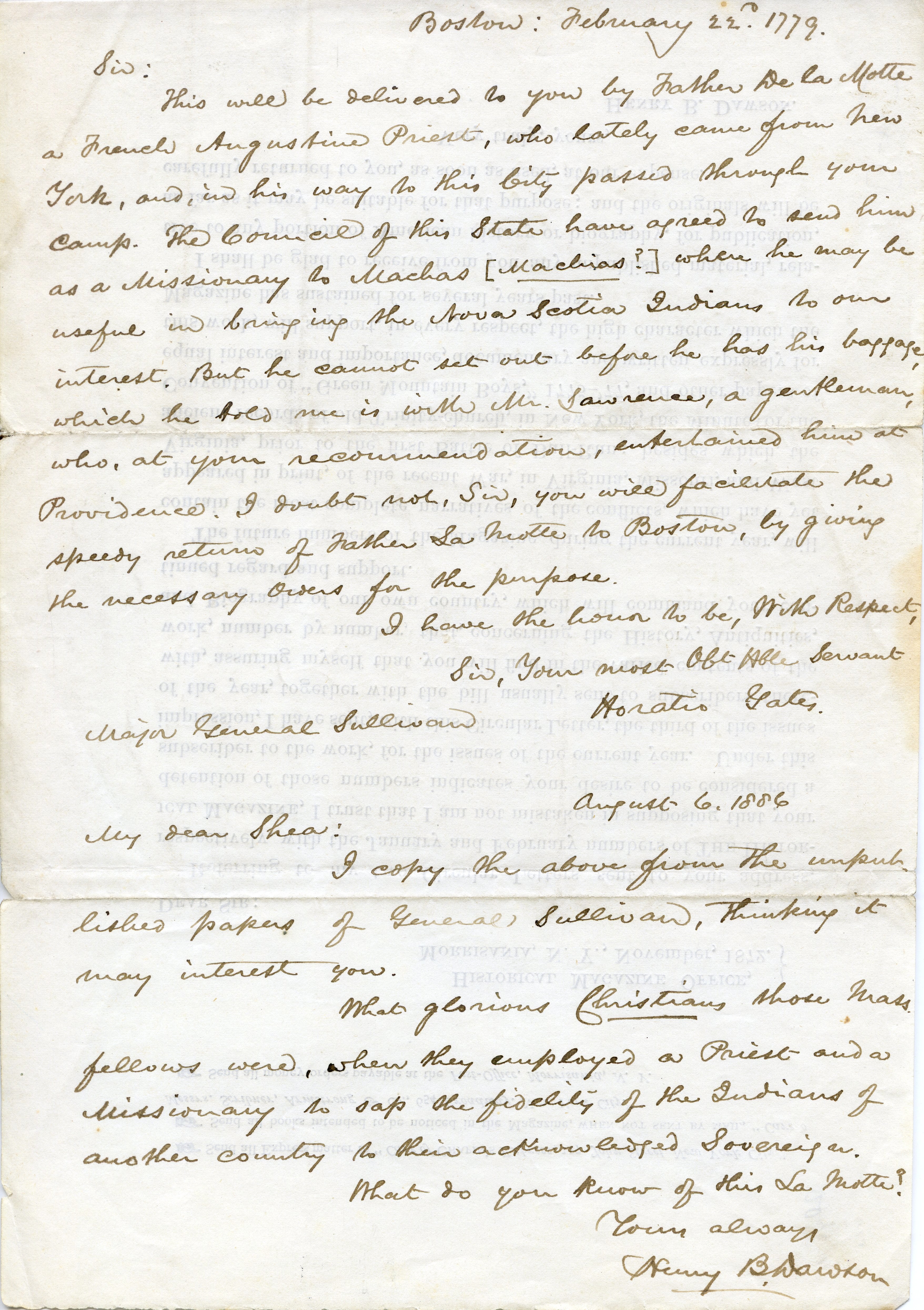
Letter from Horatio Gates to Major General Sullivan
February 2, 1779
John Gilmary Shea Papers
GTM-GAMMS269, Box 2 Folder 42
Transcript of a letter from Horatio Gates to Major General Sullivan informing him that Fr. de la Motte, a French Augustinian priest, will be sent to the “Machias” (Passamaquoddy Tribe) to obtain support for the war from the Native Americans in Nova Scotia.
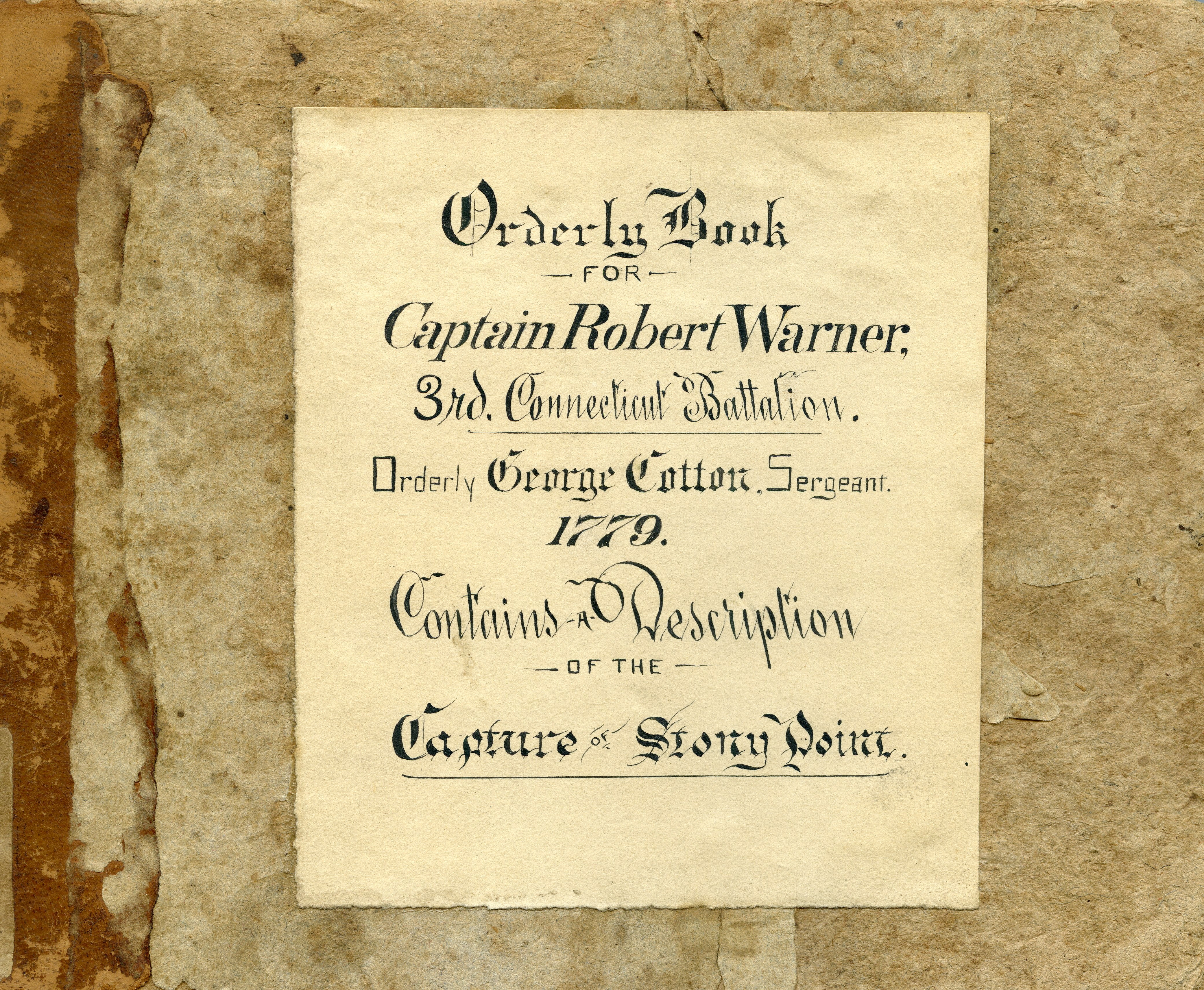
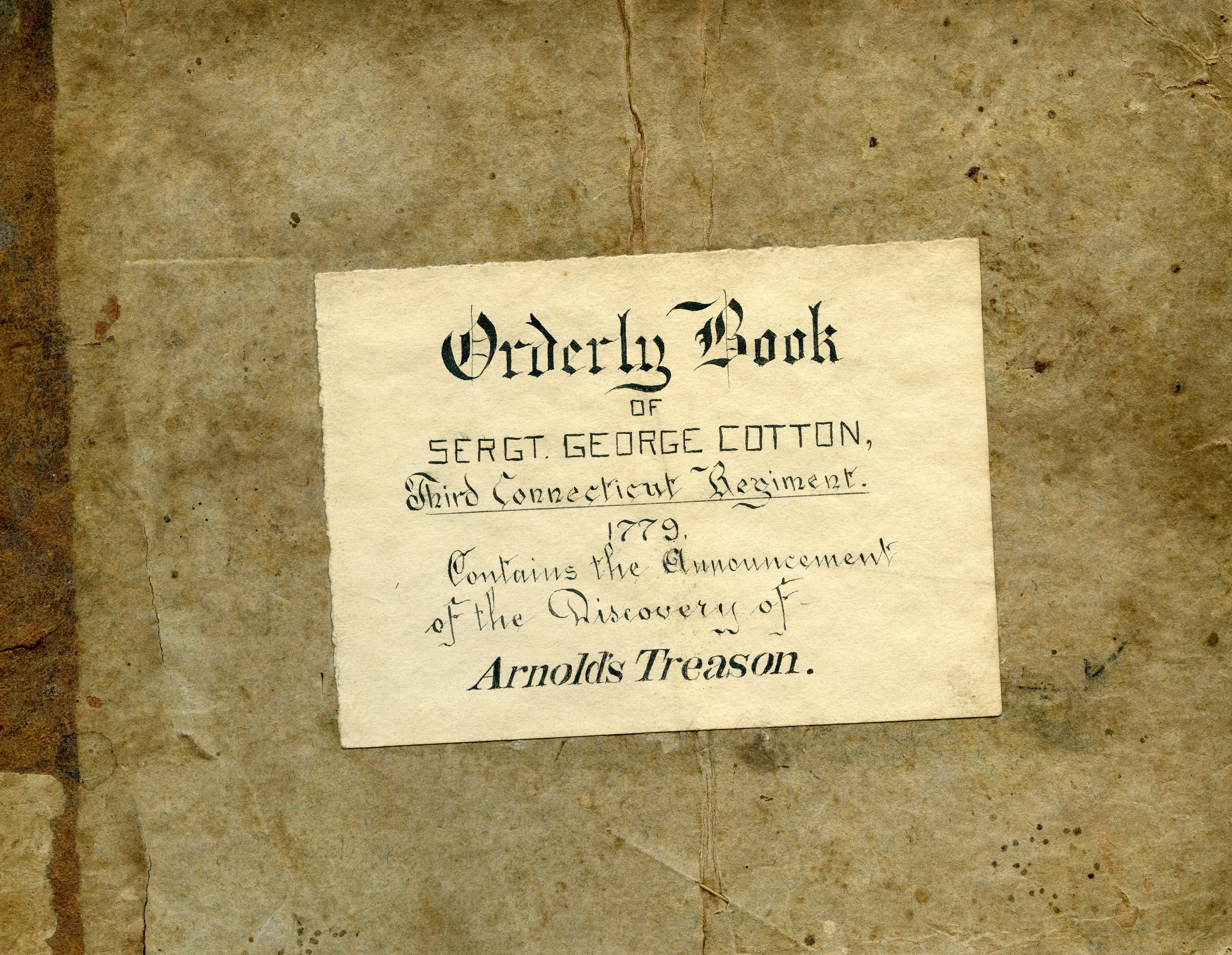
Connecticut Orderly Books
1779
John Gilmary Shea Papers
GTM-GAMMS269, Box 22 Folder 65
Two orderly books from a Connecticut Regiment. Orderly books documented the day-to-day activities of military units. One of the orderly books on display is the “Orderly Book for Captain Robert Warner, 3rd Connecticut Battalion, Orderly George Cotton, Sergeant, 1779,” which includes a “Description of the Capture of Stony Point.” The other item is Cotton’s orderly book which “Contains the Announcement of the Discovery of [Benedict] Arnold’s Treason.”
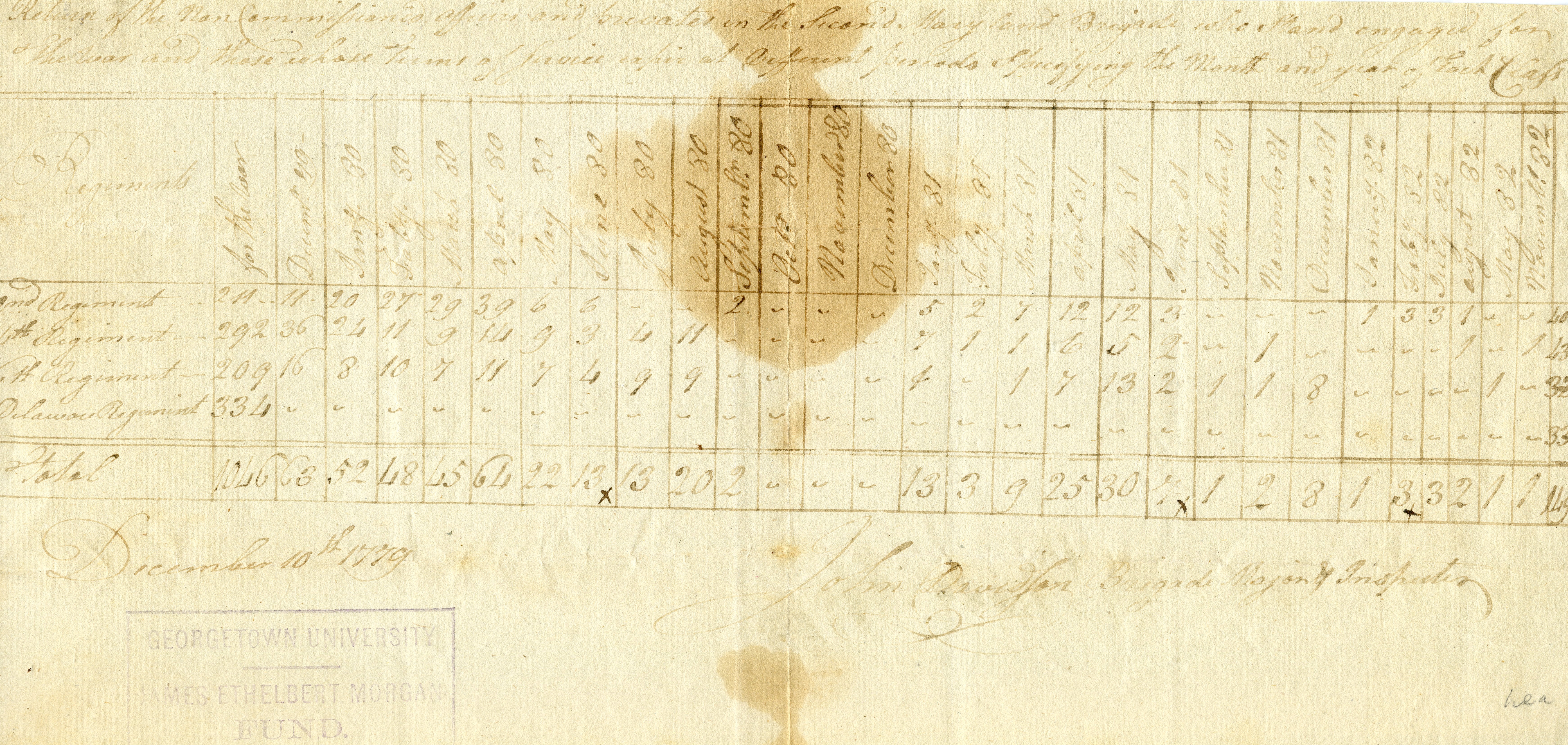
Maryland Muster Roll
December 10, 1779
John Gilmary Shea Papers
GTM-GAMMS269, Box 22 Folder 41
This muster roll documents the return of non-commissioned officers and privates of the Second Maryland Brigade, signed by Brigade Major John Davidson and Inspector.
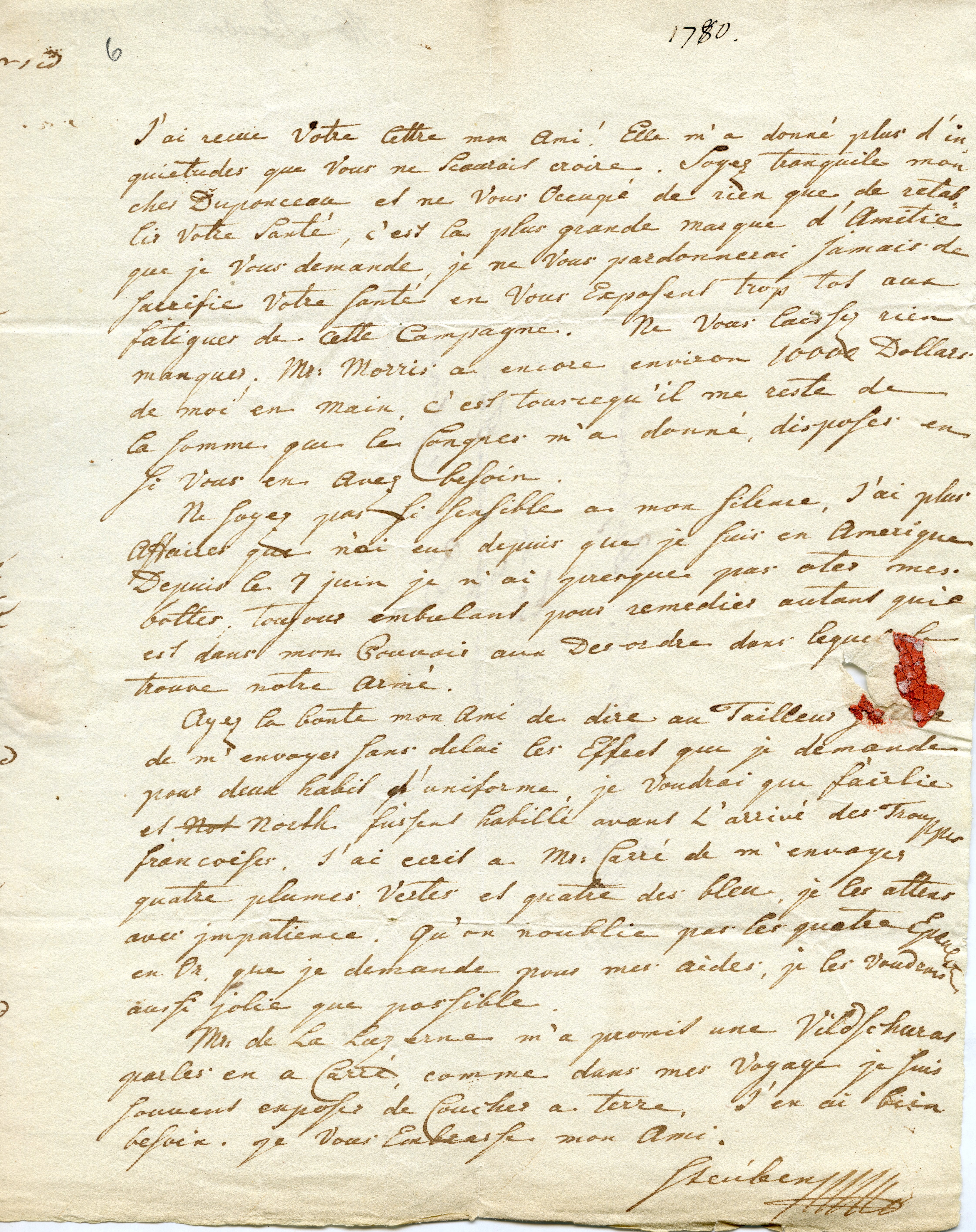
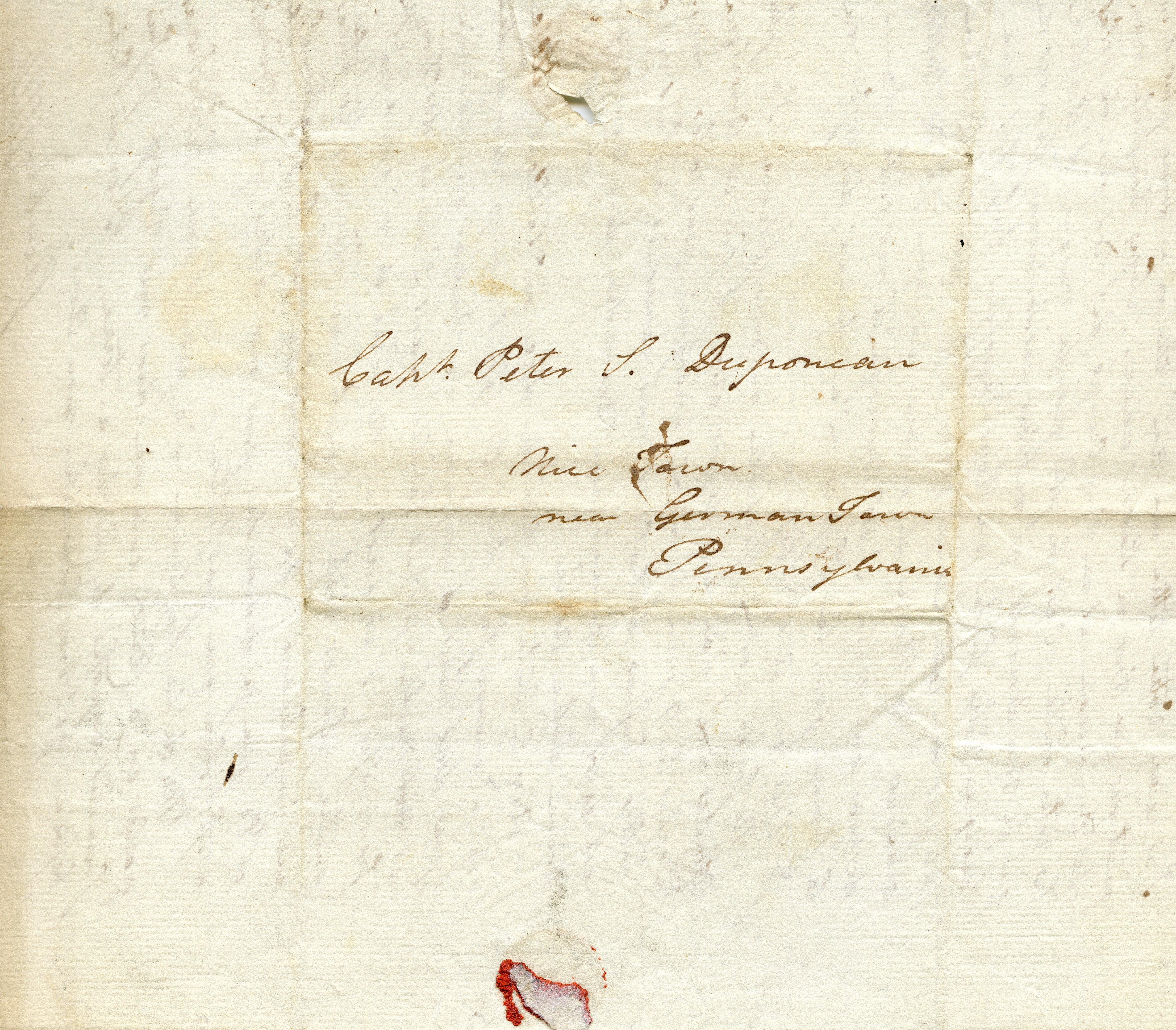
Letter from Baron von Steuben to Peter Stephen Du Ponceau
1780
Mimika Farish Firth Collection
Letter (in French) from Prussian military officer Baron von Steuben to captain Peter Stephen Du Ponceau. Von Steuben joined the Continental Army and proceeded to drill its soldiers and increase its efficiency. Du Ponceau was a secretary and interpreter for von Steuben during the war. This letter was sent to Germantown, Pennsylvania.
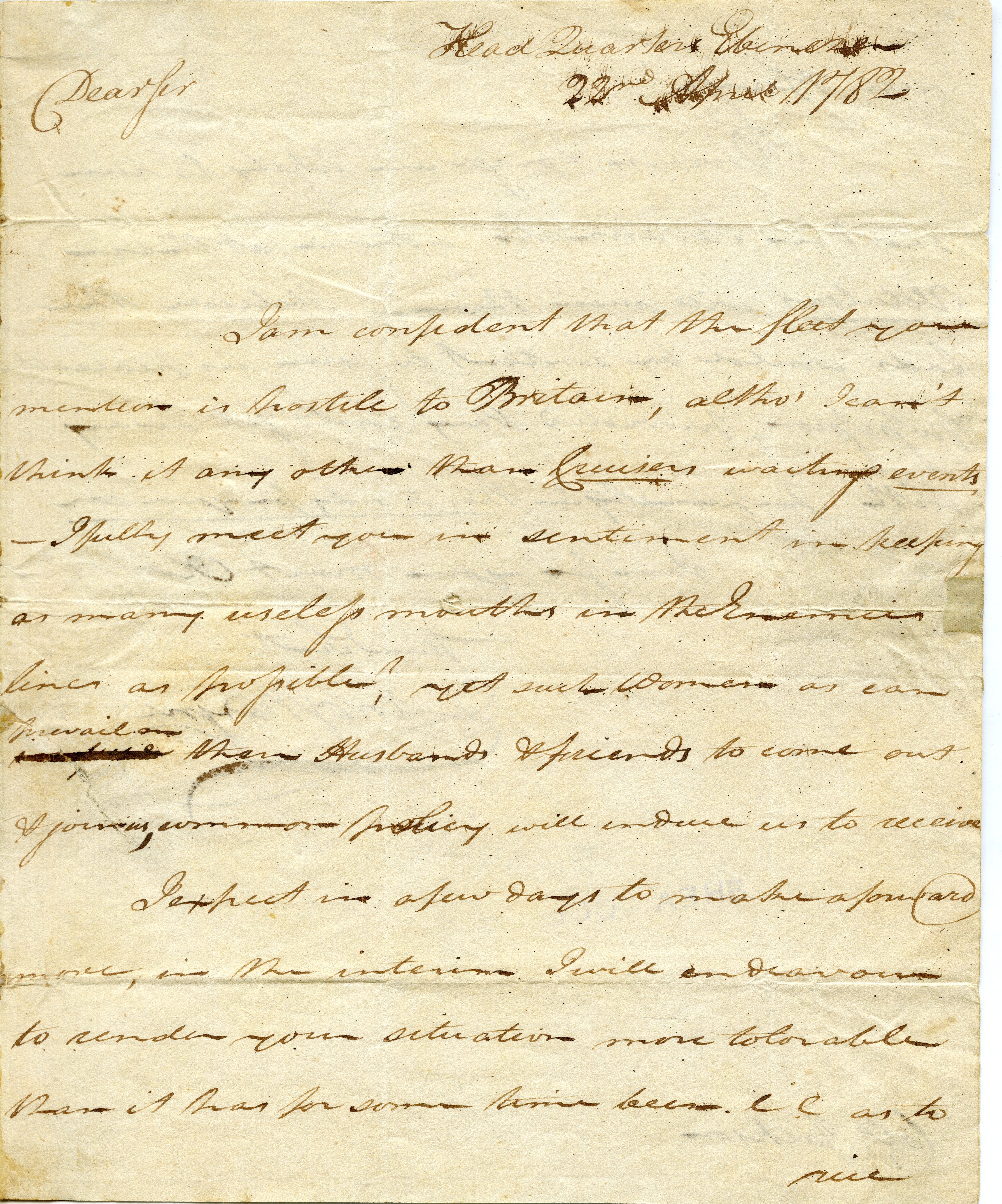
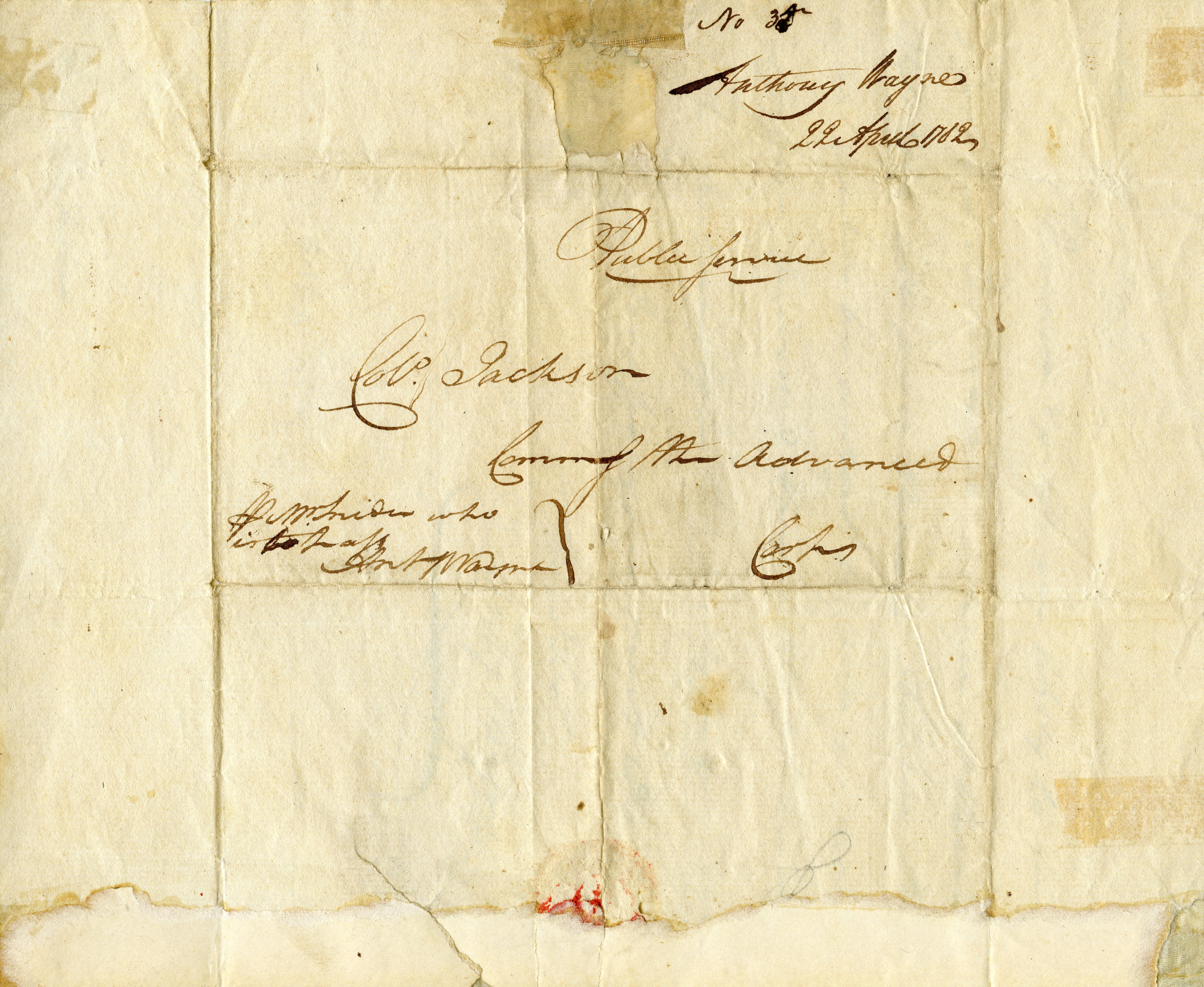
Letter from Anthony Wayne to Col. Jackson
Letter from Anthony Wayne to Col. Jackson
April 22, 1782
John Gilmary Shea Papers
GTM-GAMMS269, Box 22 Folder 66
General Anthony Wayne wrote this letter to Col. Jackson, who commanded the advanced corps in his unit. Wayne referred to a naval fleet to counter the British and to his expectation that provisions and forage may run low in Savannah, Georgia. Sent from Head Quarters, Ebenezer, Georgia. General Nathanael Greene had instructed Wayne to force the British troops from the area.
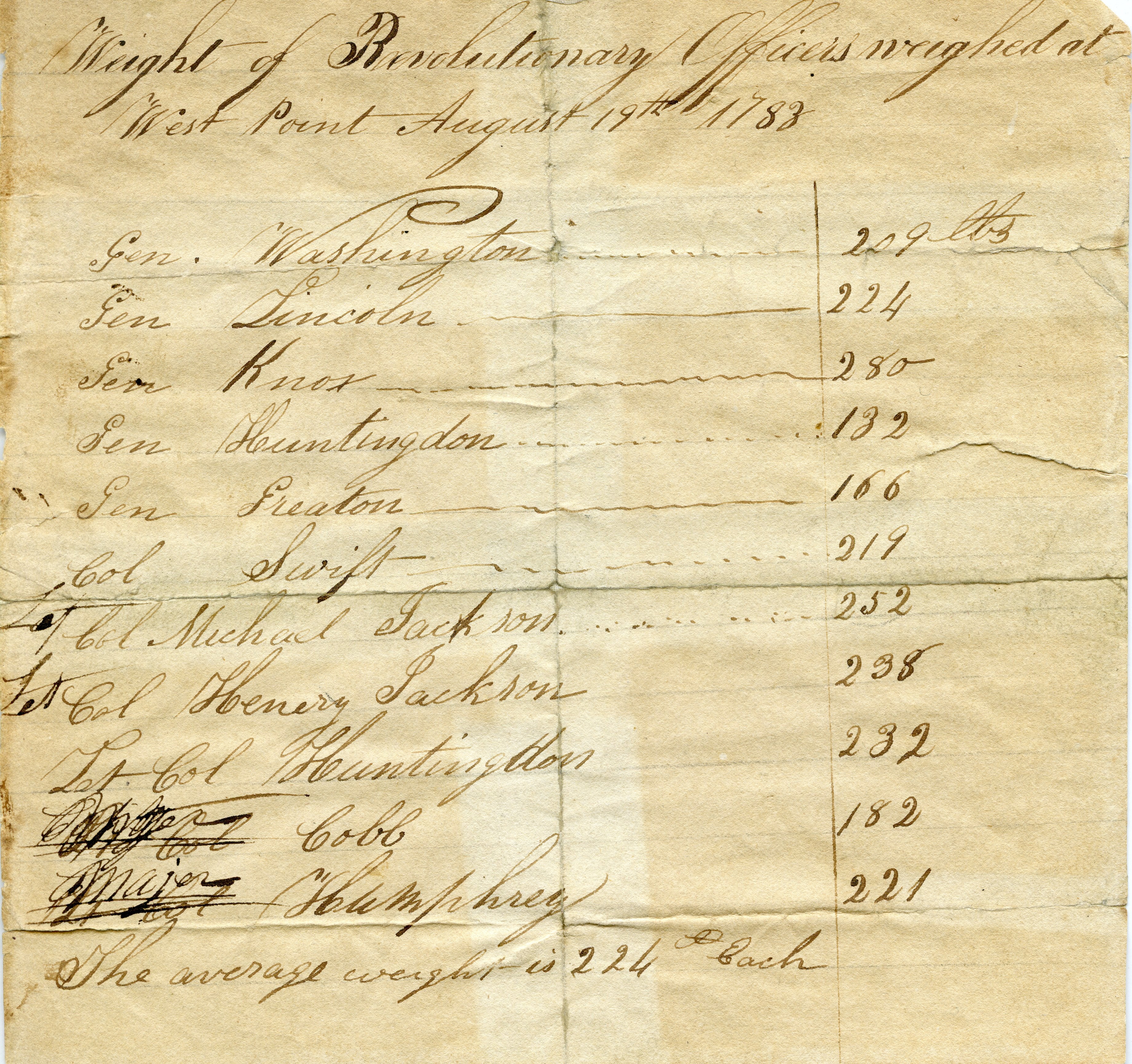
Weight of Revolutionary Officers Weighed at West Point
August 19, 1783
John S. Mayfield Papers: Autographs Series
GTM-830101a, Box 5 Folder 34
This document lists the weights of several American officers during the war. George Washington, an imposing figure, weighed 209 pounds. Henry Knox, who was known for his girth, weighed 280 pounds. At the time when this document was created, General Washington was on an inspection tour of the fort at West Point in 1783. The Paris Peace Treaty, which officially ended the war, was signed on September 3, 1783.
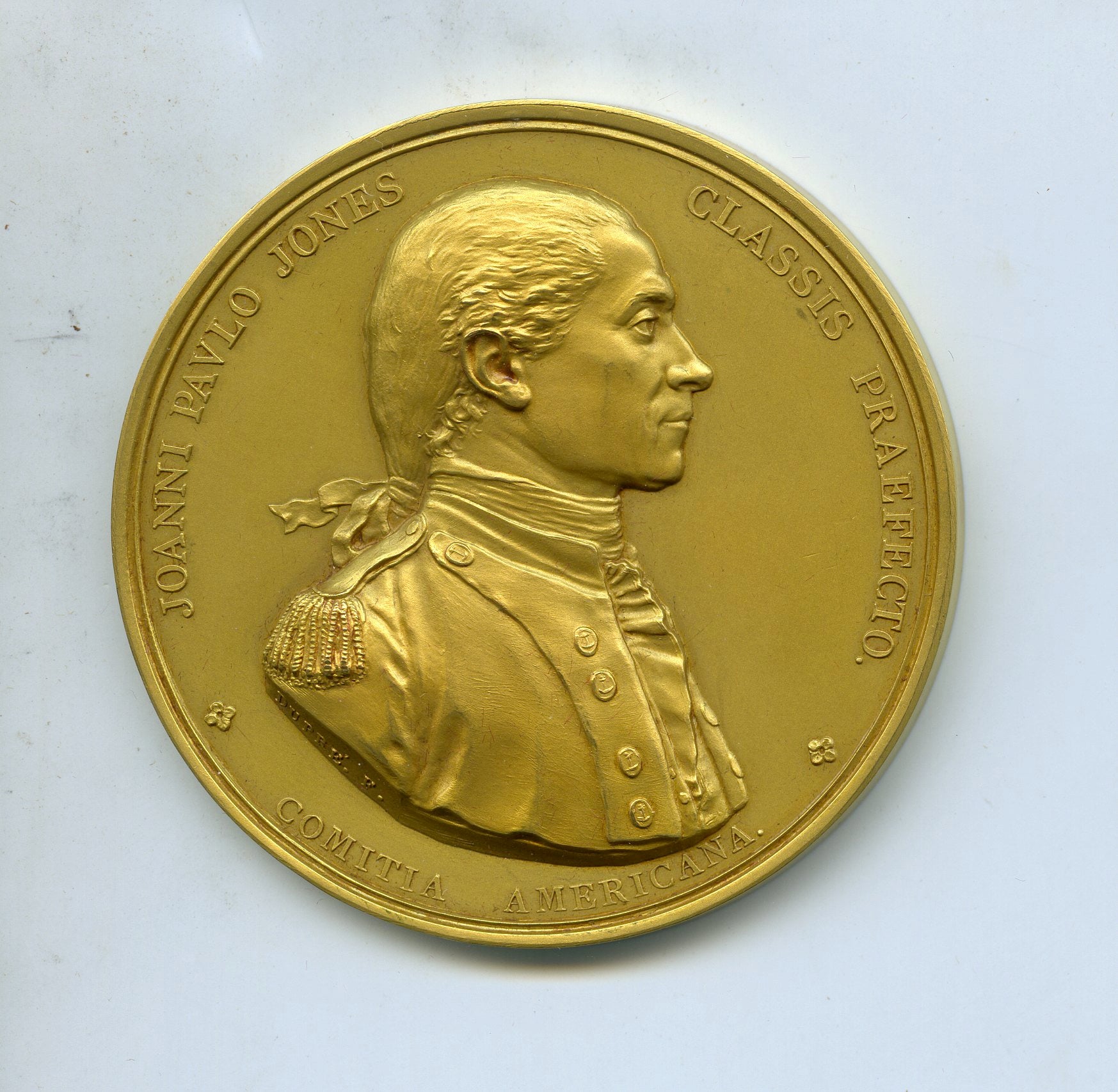
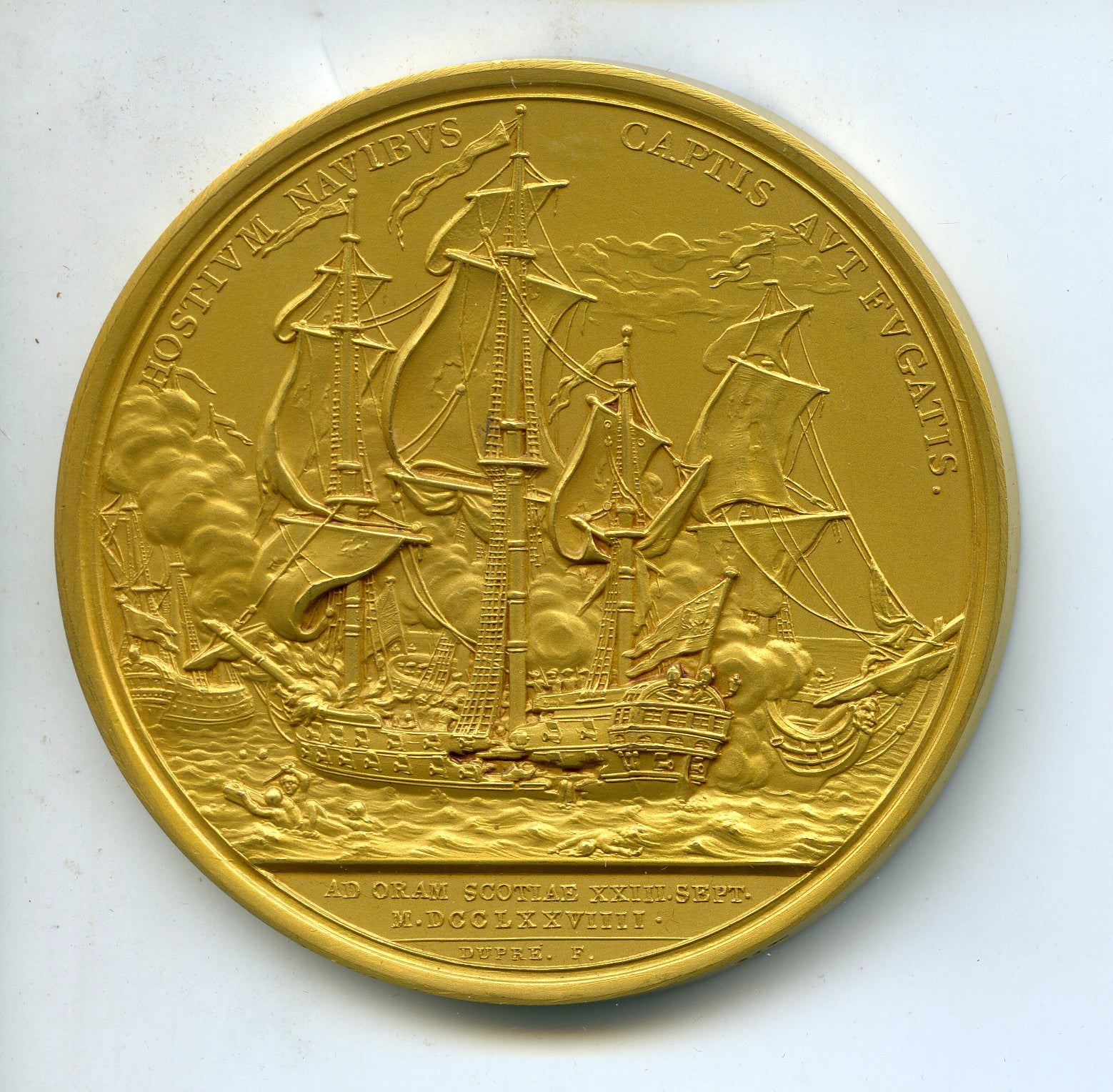
John Paul Jones Medal
Horace Porter Collection
GTM-GAMMS249
Box 3
Medal depicting American naval officer John Paul Jones, presented to Horace Porter. The front of the medal bears an image of Jones, and the back of the medal shows two ships of sail in combat against each other. Jones won some key victories during the war. Horace Porter was a Union general who served with General Ulysses S. Grant during the American Civil War. Porter served as U.S. Ambassador to France from 1897 to 1905. While in France, he located the burial place of Jones, who had been buried in an unmarked grave, and had his remains sent back to the United States where Jones’ body was reinterred at the Naval Academy.
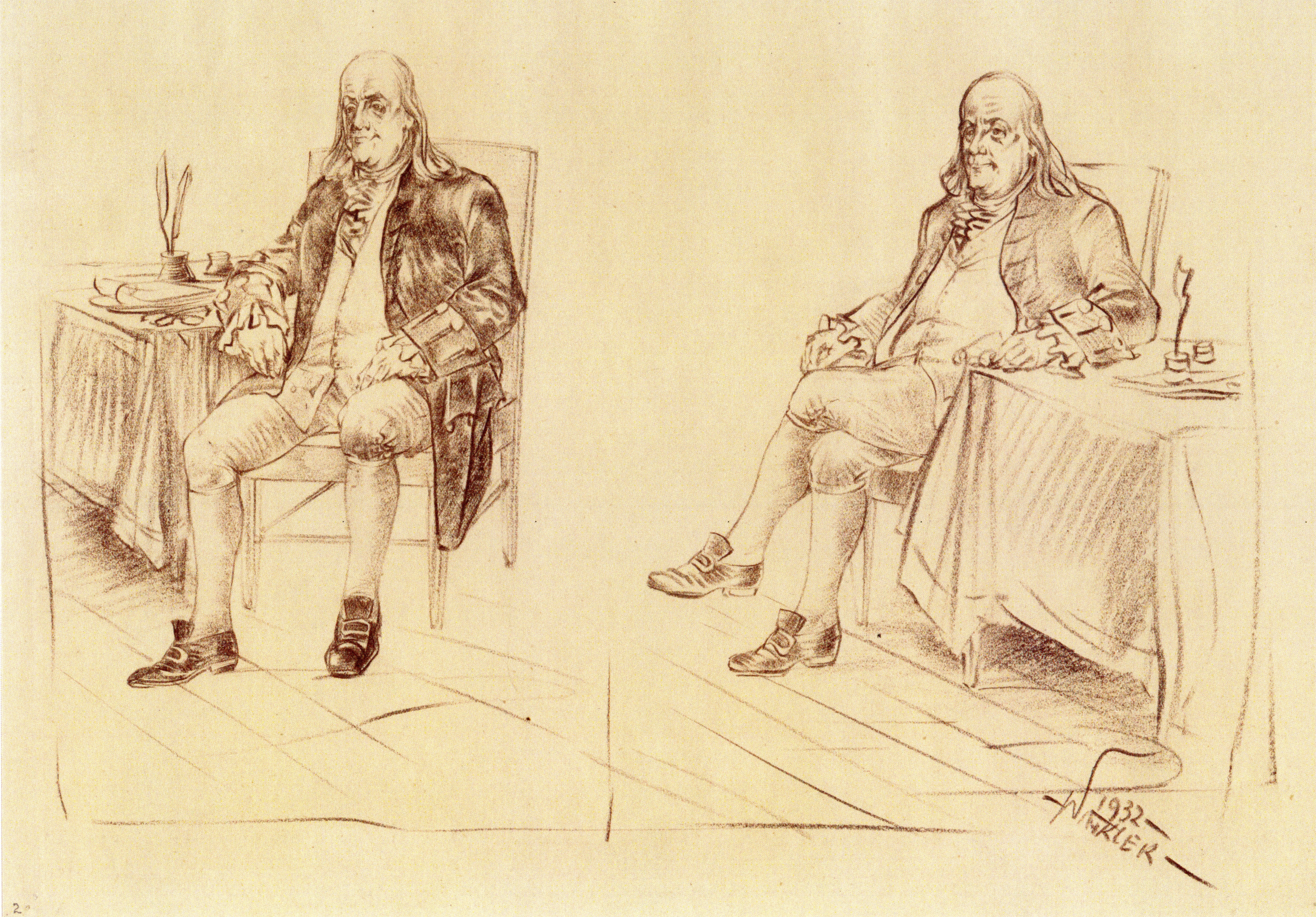
Benjamin Franklin (Double Study)
1932
20th century
John W. Winkler, American (1890-1979)
Object Type: Drawing
Medium and Support: Conté crayon (brown) on paper
Credit Line: Gift of Carol Johnson and John Aronovici, 2000
Accession Number: 2000.39.2
Benjamin Franklin contributed to the American victory in the Revolutionary War in many ways. He attended the Second Continental Congress, co-authored the Declaration of Independence, and successfully established a treaty between America and France to provide key French assistance to the war effort. A reproduction of the drawing is displayed in this exhibition.
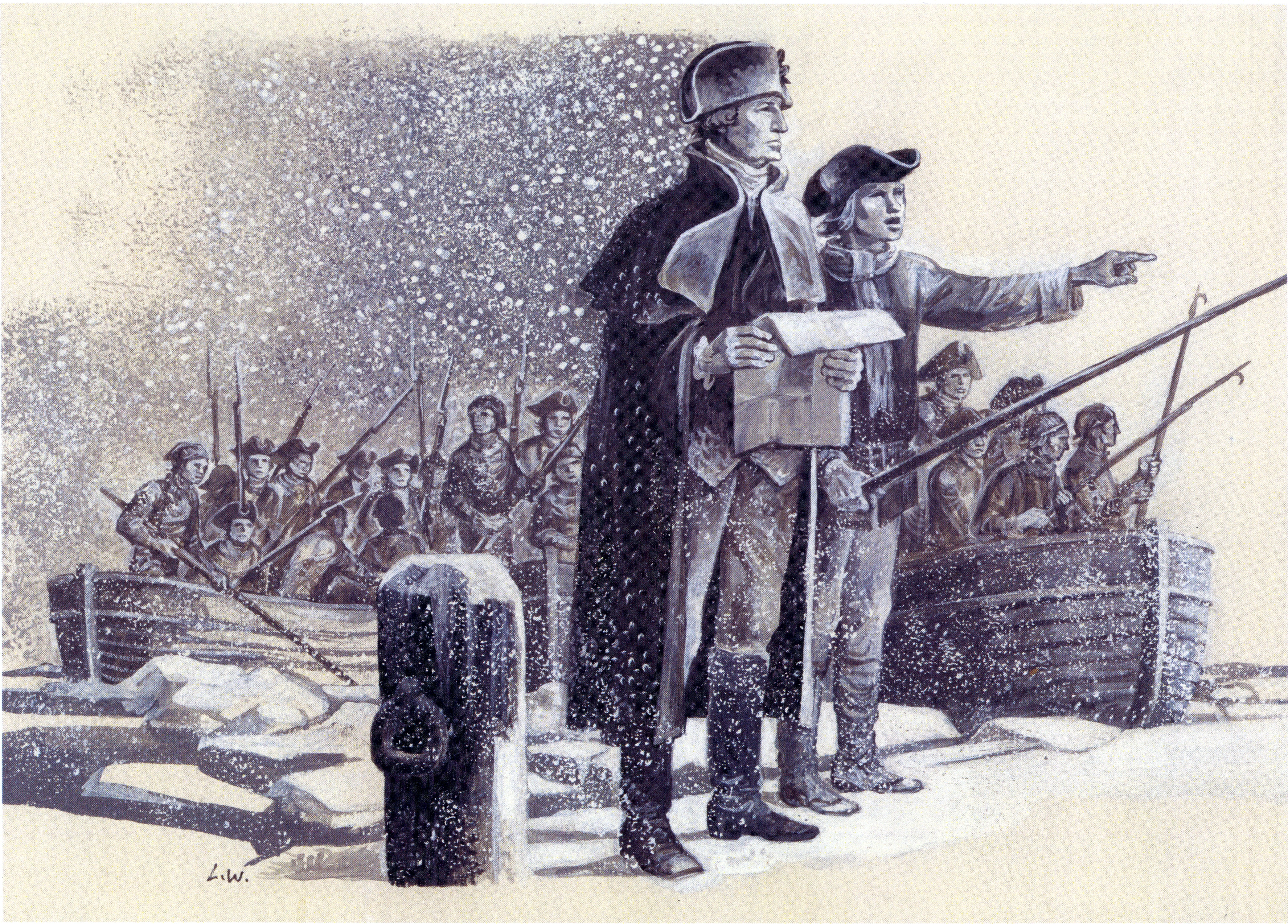
Drawing of George Washington
Untitled
[Colonial soldiers in the snow, for “The Story of George Washington”]
ca. 1973
20th century
205 x 313 mm
Lynd Ward, American, (1905–1985)
Object Type: Drawing
Medium and Support: Watercolor on illustration board
Credit Line: Gift of Robin Ward Savage and Nanda Weedon Ward
Accession Number: 1981.1.4
General George Washington commanded the Continental Army during the war. He later became the first President of the United States of America. A reproduction of the drawing is displayed in this exhibition.
Curated by Scott S. Taylor, Manuscripts Archivist