In 1940, alumnus Raymond Reiss (C’1919) donated funds for a studio and accompanying electroacoustic equipment, wanting to enhance university instruction in public speaking. The following year, Georgetown Broadcasting System (GBS) was born, with its initial broadcasts limited to listeners on campus. In 1946—eighty years ago—GBS officially launched its AM carrier-current broadcast under the leadership of Father Francis J. Heyden, S.J., and the station transitioned from an experimental student concept into an officially recognized University entity. The station was renamed in 1947 to a more familiar WGTB.
This exhibit traces the evolution of Georgetown’s student radio station—a history marked by conflict, protest, and an unwaveringly proud alternative identity.
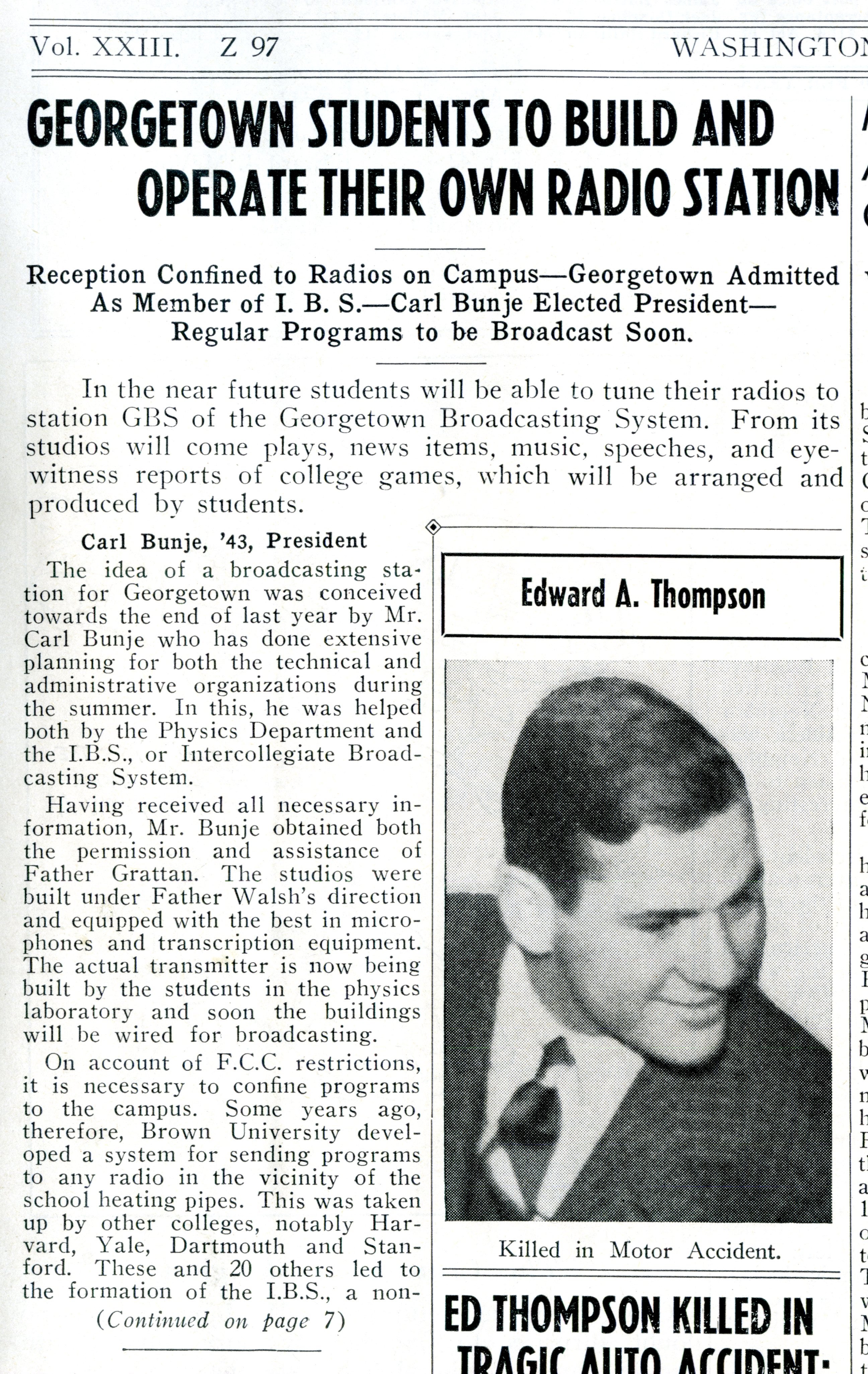
“Georgetown Students to Build and Operate Their Own Radio Station.” The Hoya, October 1, 1941
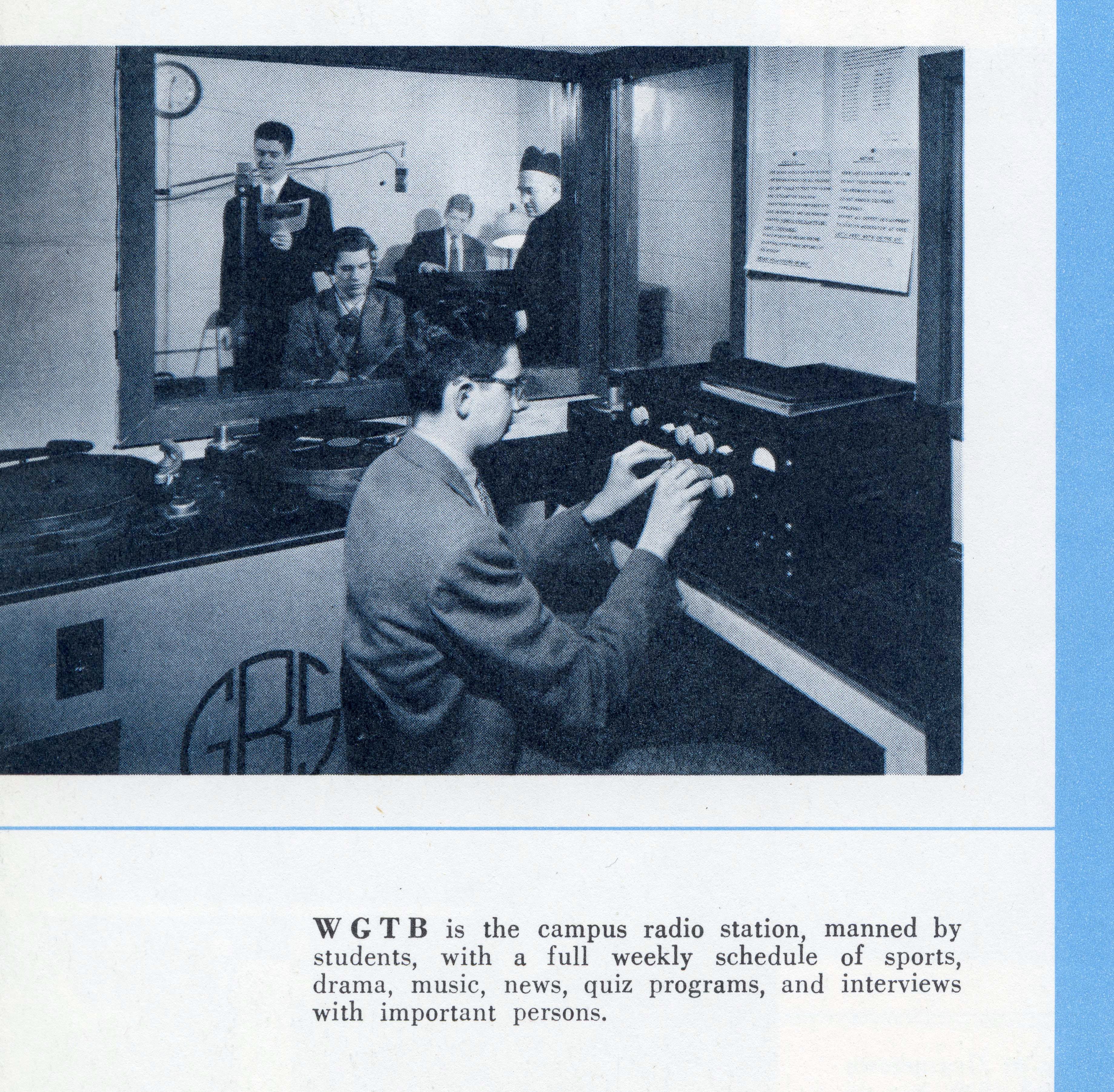
Visit to the Georgetown Campus, ca. 1955
An early campus booklet champions WGTB, with its impressive equipment and recording studios, as a proud aspect of university life.
As the first university radio station in the DC area, WGTB (originally GBS) oversaw two studios with groundbreaking technology. During the station’s four-year hiatus brought by World War II, the U.S. Navy availed itself of the station’s equipment.
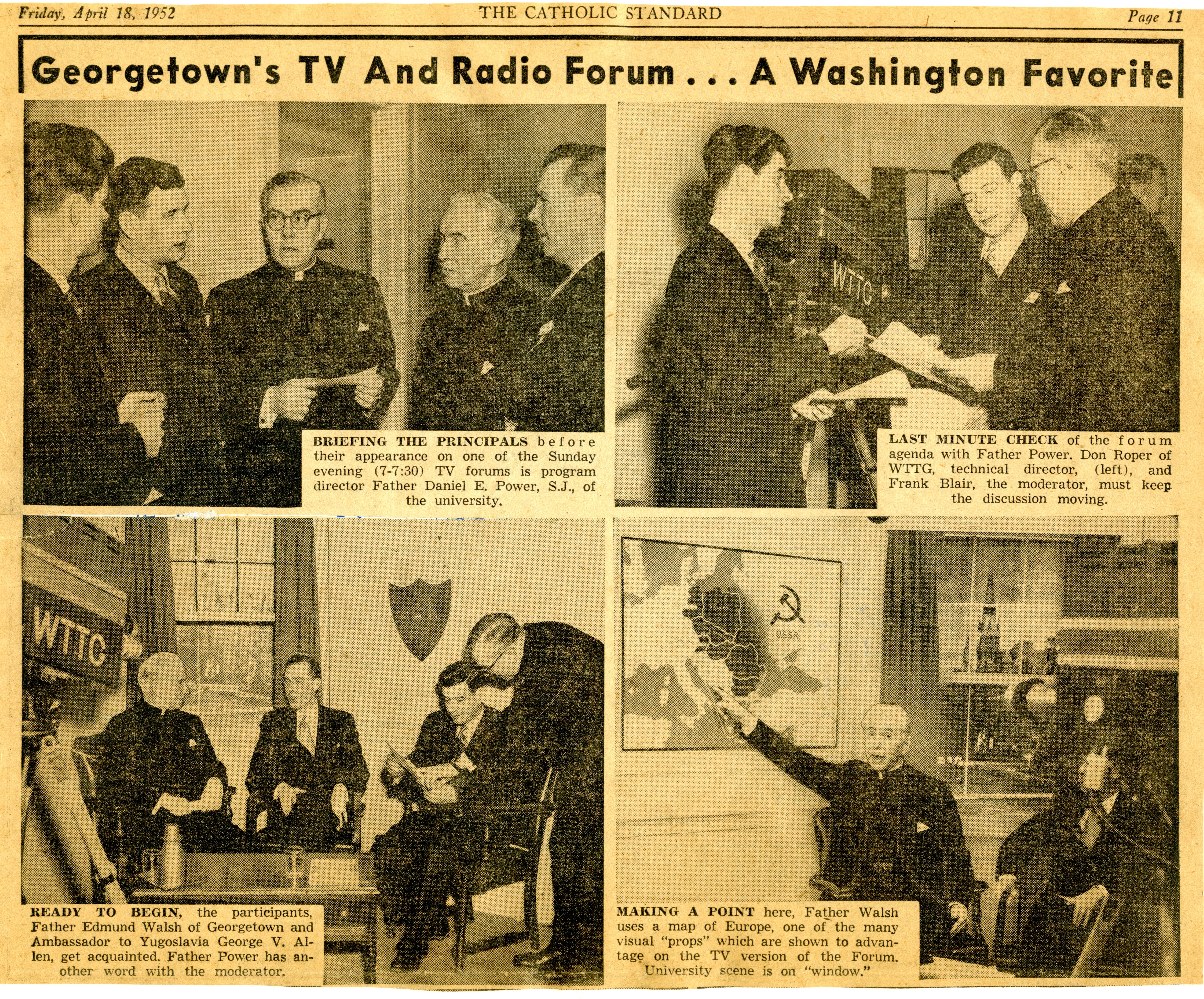
“Georgetown’s TV And Radio Forum…A Washington Favorite.” Catholic Standard, April 18, 1952
In its early years, WGTB was perhaps best known for airing the Latin Mass for local shut-ins and for its weekly “Georgetown University Forum” broadcast. The Forum was a University-produced weekly public affairs panel discussion program.
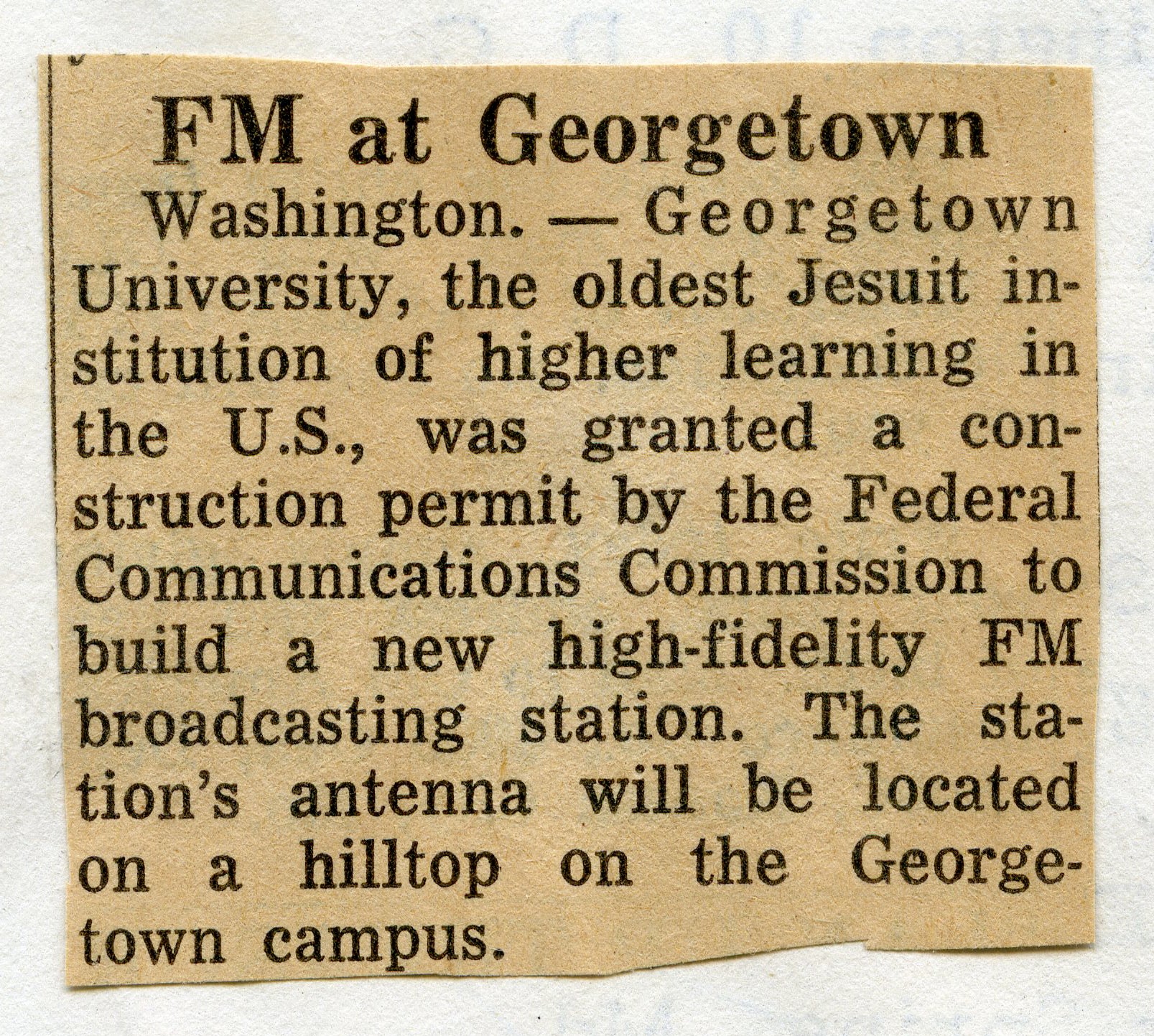
“FM at Georgetown.” Clipping from an unidentified newspaper, June 5, 1960
In 1960, WGTB acquired its FM license with an assigned frequency of 90.1FM. C-SPAN now occupies the same wavelength.
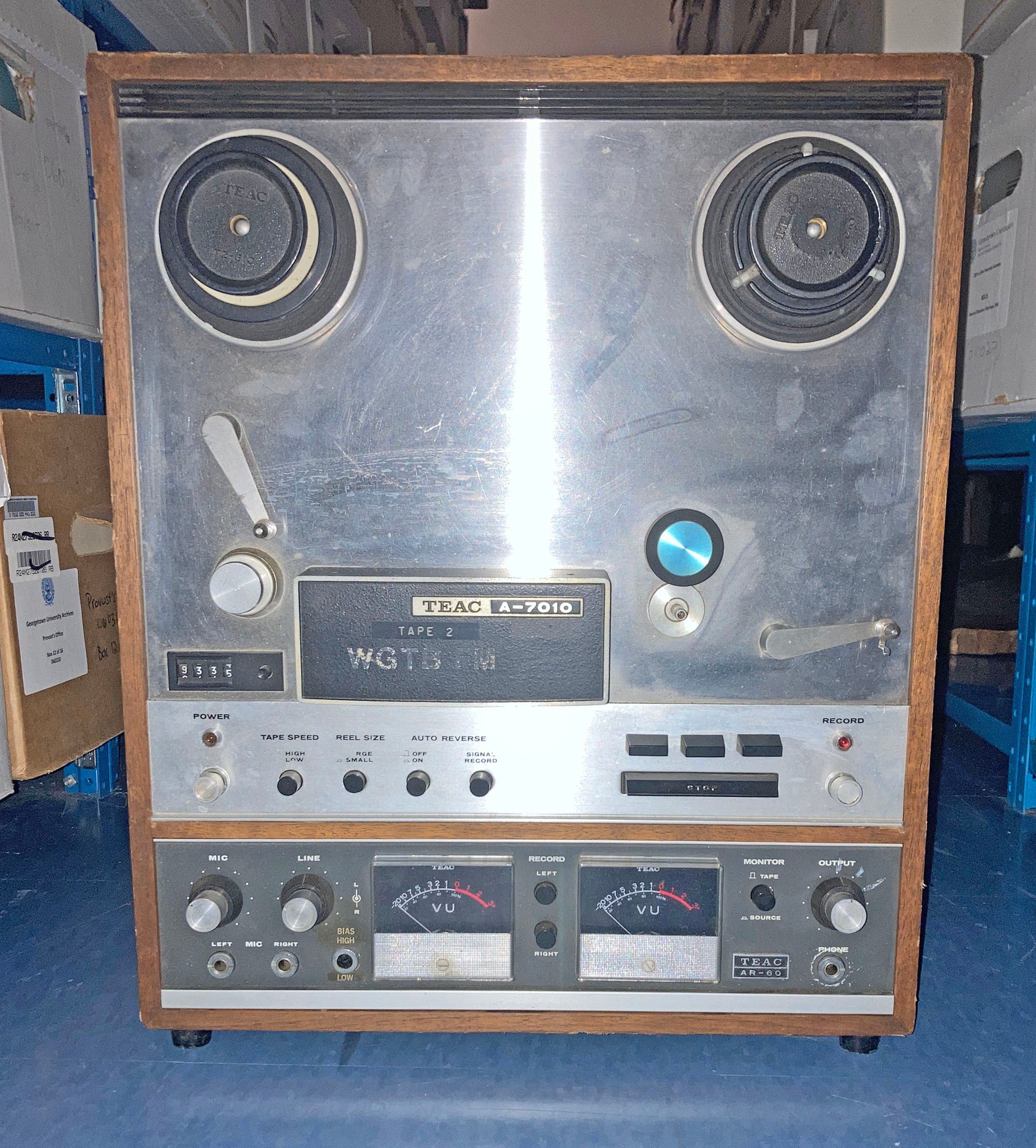
WGTB-FM branded reel-to-reel tape player
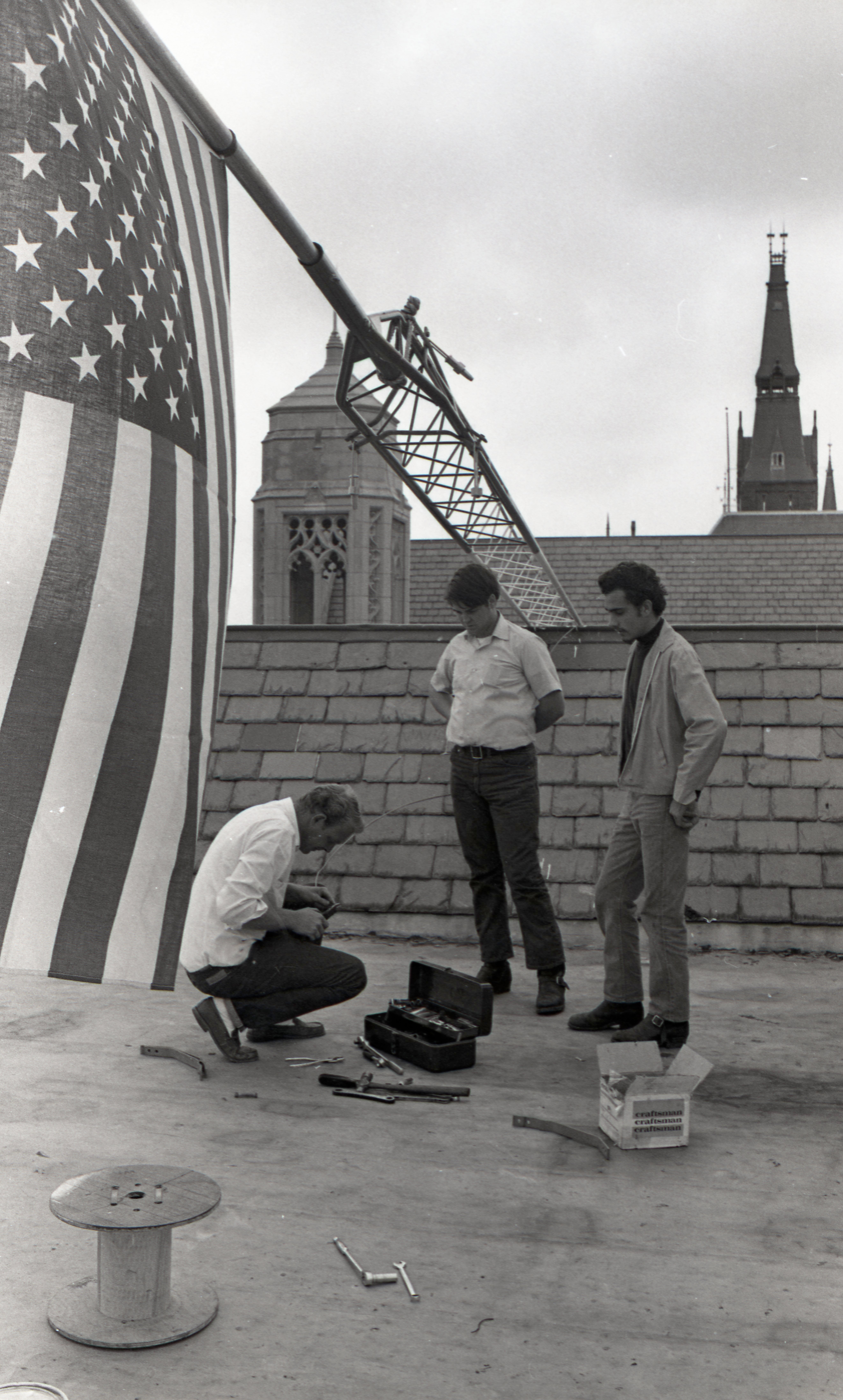
Antenna damage, October 8, 1970. University Photographer’s Files
In 1970, WGTB’s antenna tower fell from the roof of Copley Hall. Subsequently, the station was ordered out of commission. Occurring at the height of tensions with Georgetown's Physics Department, who claimed it interfered with their equipment, WGTB supporters were skeptical as to the accidental nature of this incident.
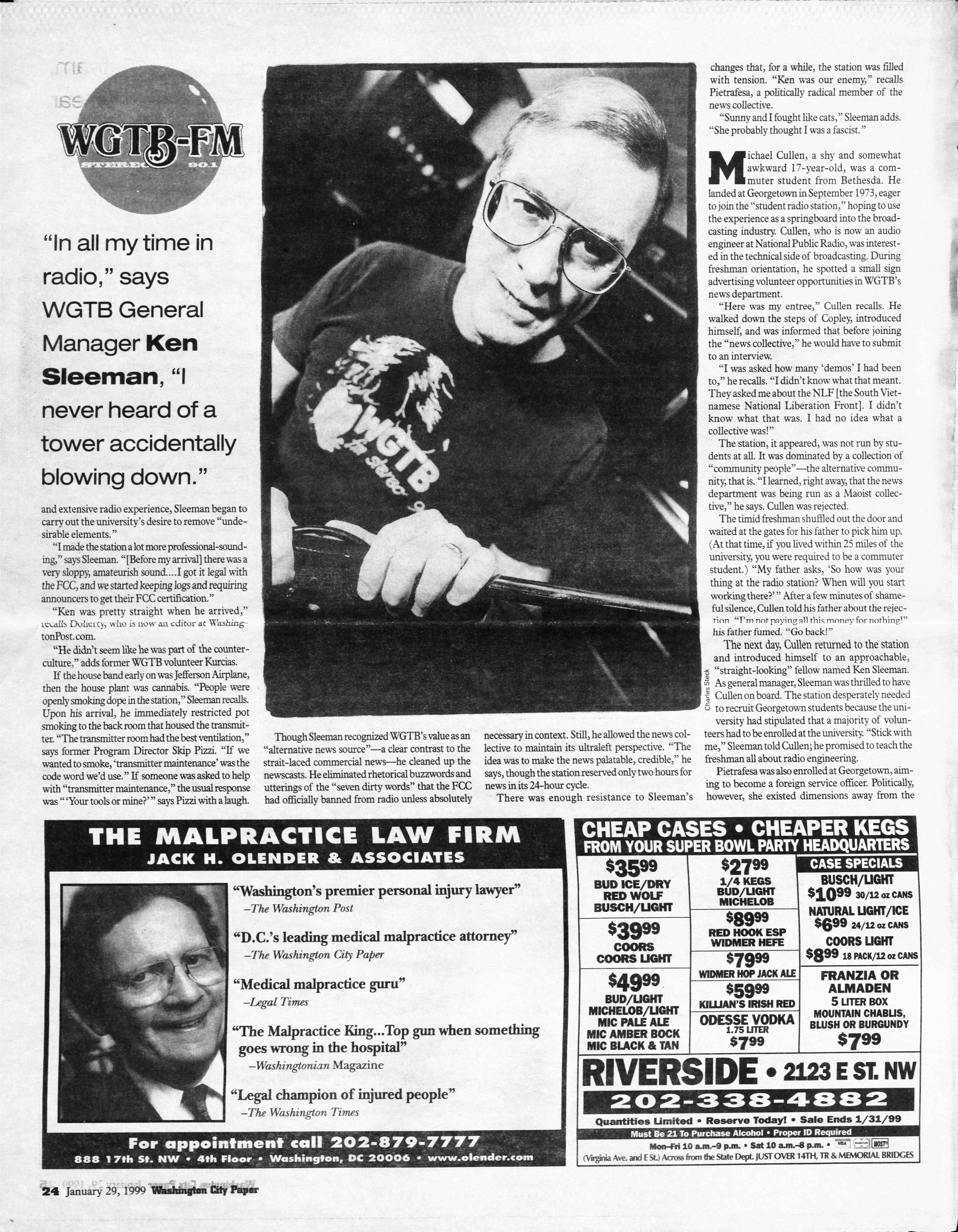
“Radio Free Georgetown” by Guy Raz. Washington City Paper, Jan. 29-Feb. 4, 1999, page 4. Includes pull quote from Ken Sleeman about the 1970 antenna damage
Georgetown University hired Kenneth Sleeman as WGTB’s general manager in December 1971. While initially a strict authority over the increasingly defiant student staff, Sleeman eventually grew sympathetic to their leftist agenda.
Ultimately, he was terminated in 1975 for permitting anti-war programming and controversial content, such as songs featuring profanity.
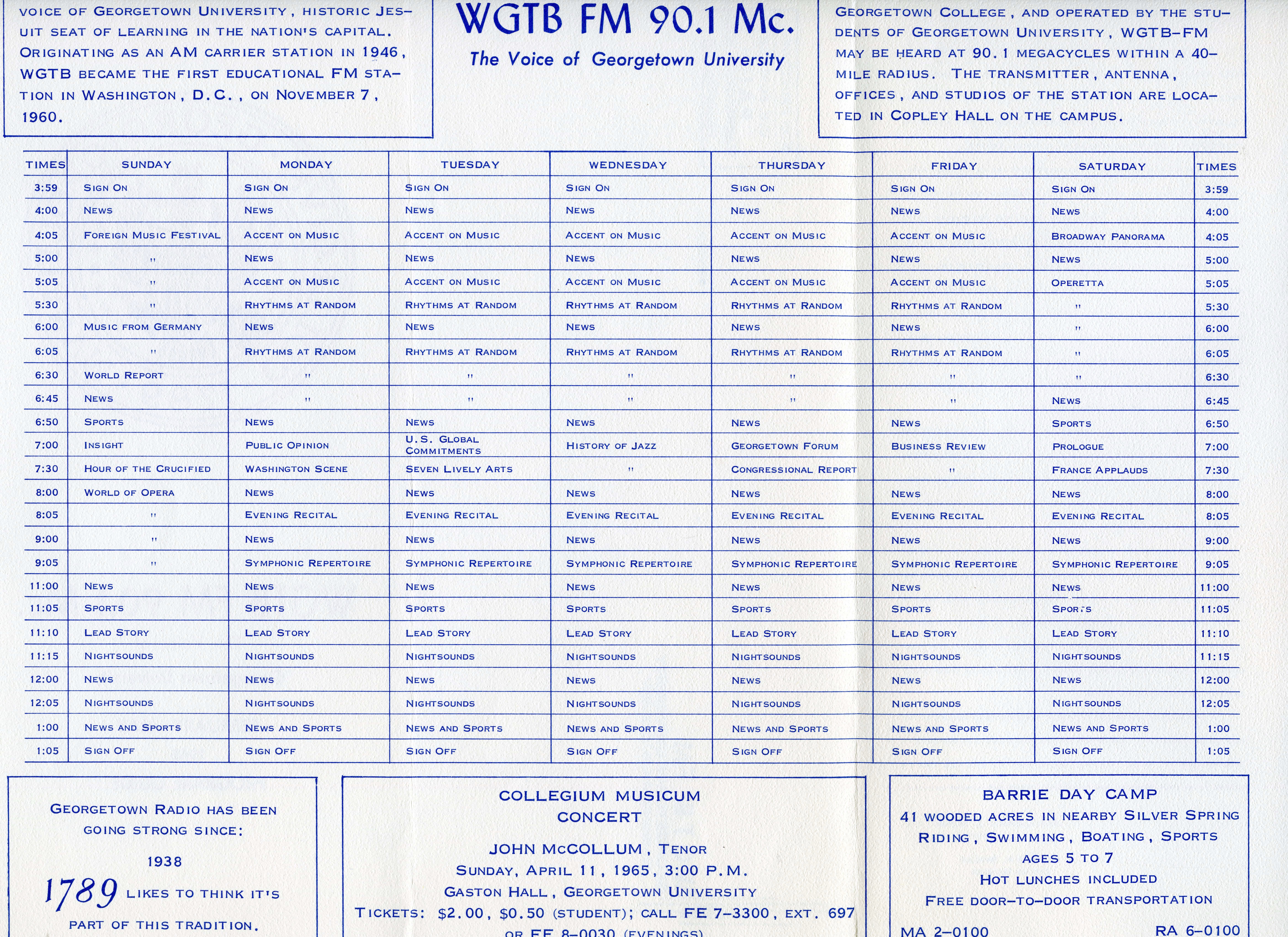
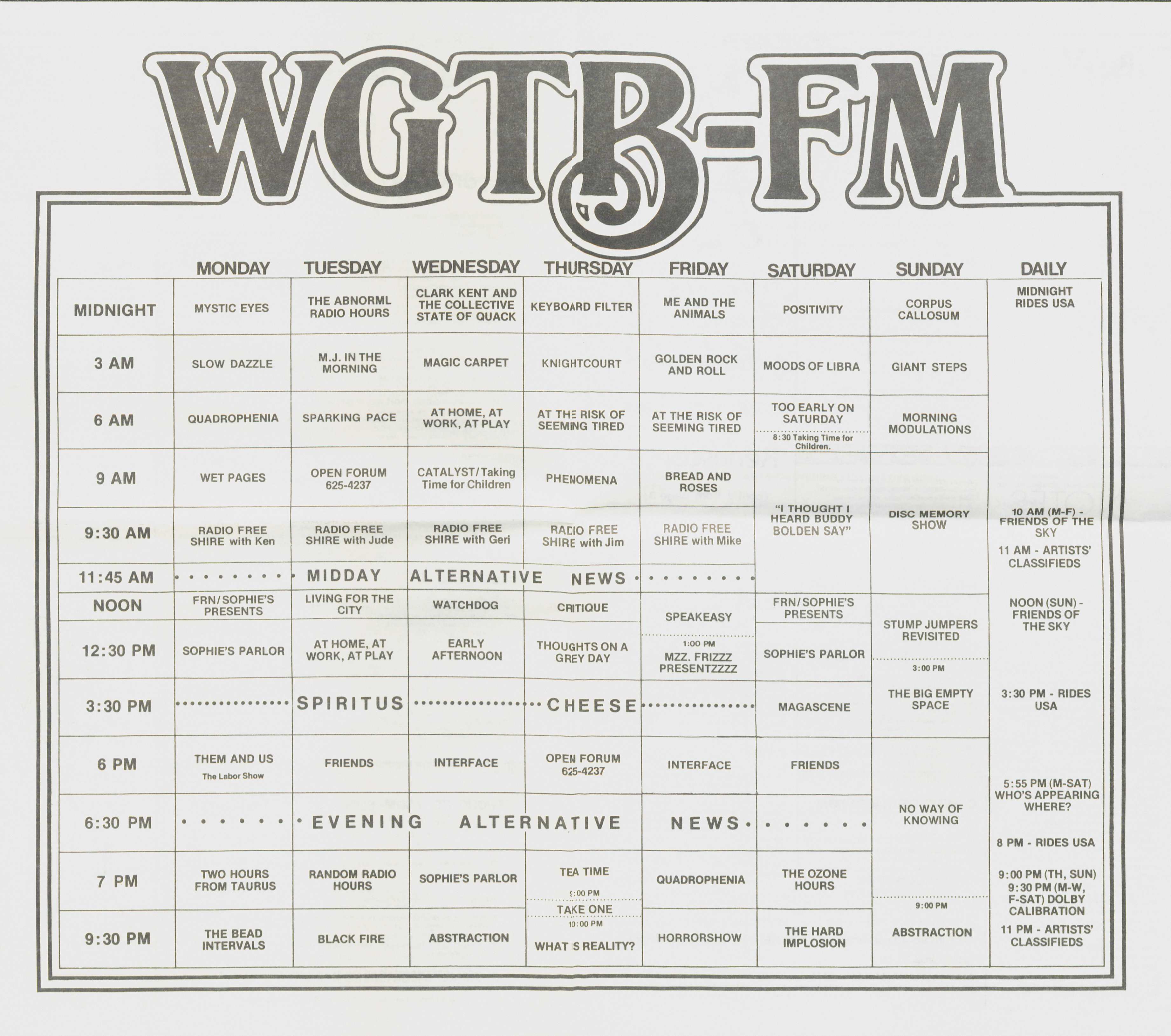
WGTB Program Guides, February-May 1965 (left) and Winter 1975/76 (right)
Despite being only ten years apart, these program guides demonstrate the radical shift in WGTB’s ethos marked by the 70s, with austere shows like Evening Recital and News phased out for quirkier ones like Clark Kent and the Collective State of Quack and Midday Alternative News.”
At the advent of the 1970s, students announced the station’s emphasis would be on rock’n’roll, a genre disparaged just a few years prior. This embrace of alternativity marked an identity-shift that remains today.
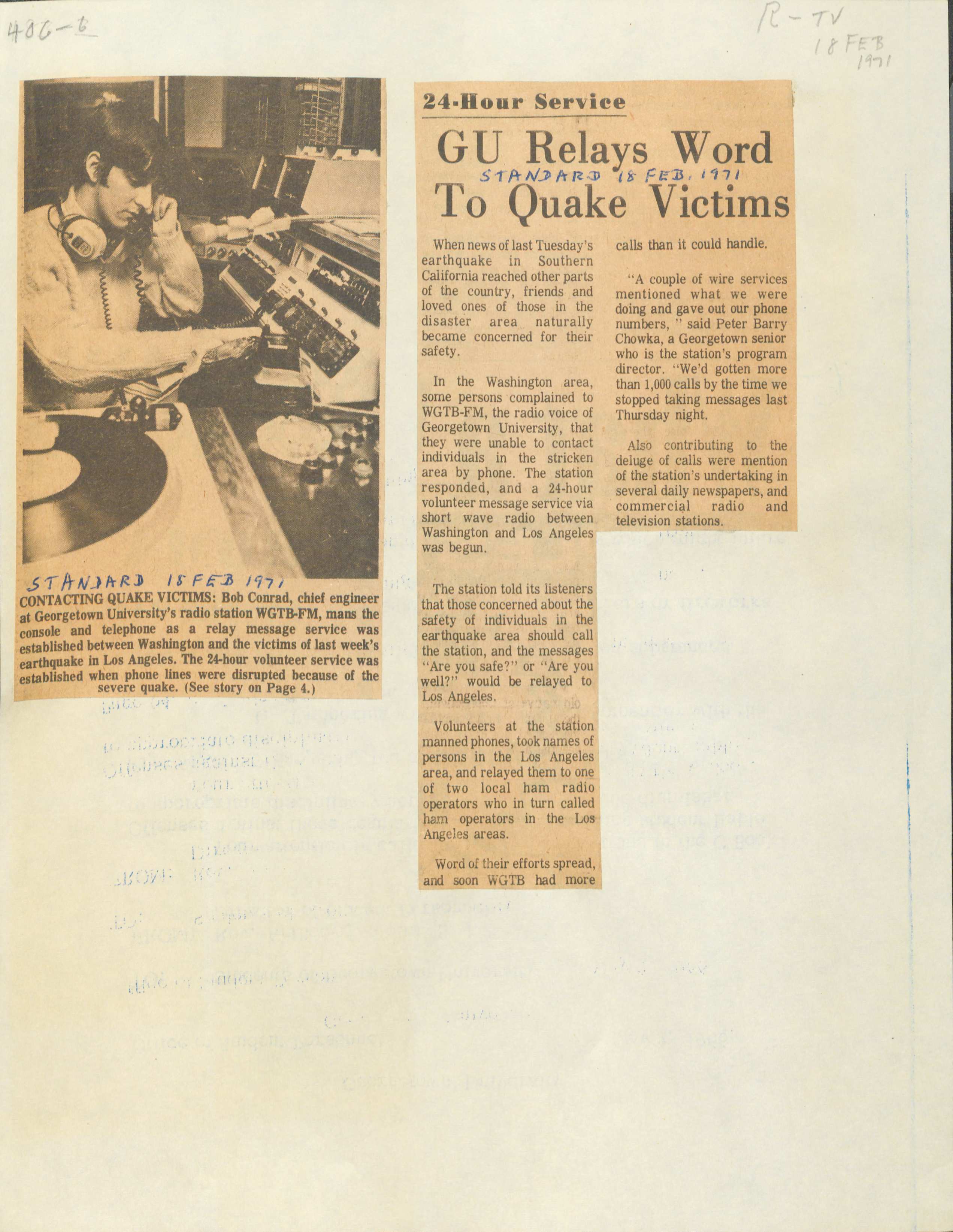
“GU Relays Word to Quake Victims.” Catholic Standard, February 18, 1971
On February 9, 1971, a severe earthquake struck Los Angeles, disrupting phone lines and leaving families across the country desperate for news of their loved ones. In response, WGTB-FM established a 24-hour volunteer relay message service.
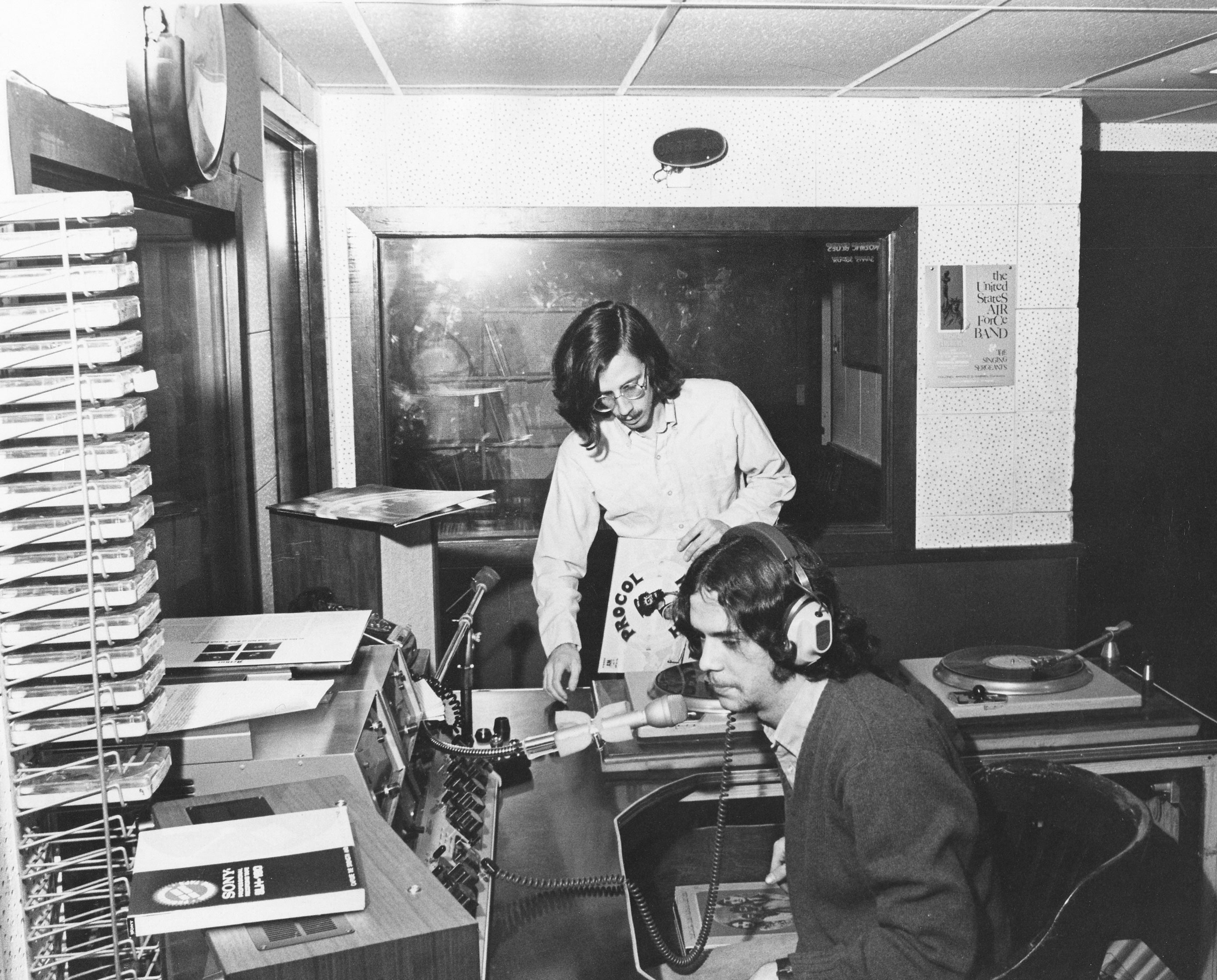
WGTB studio. Ye Domesday Booke, 1972
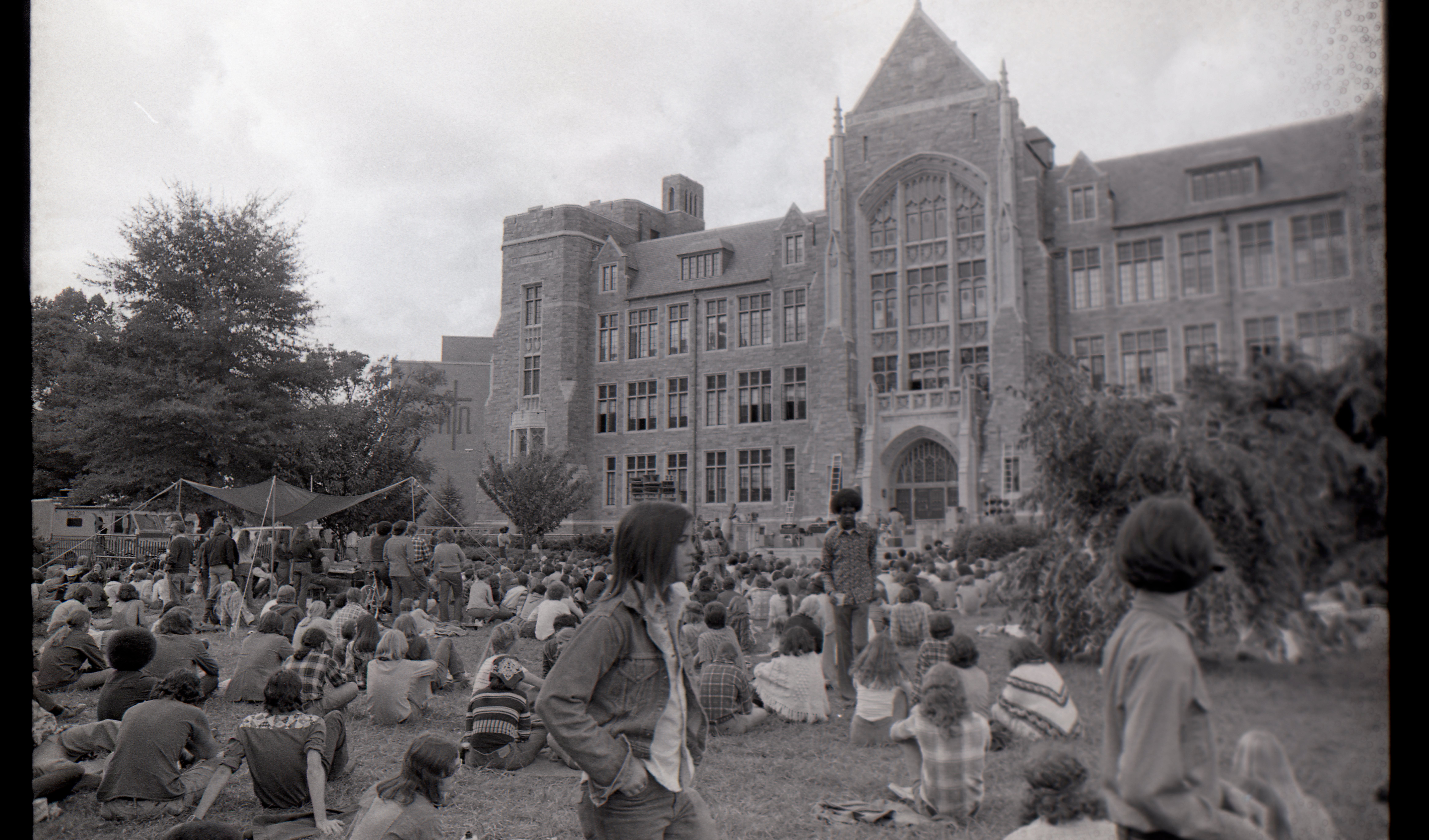
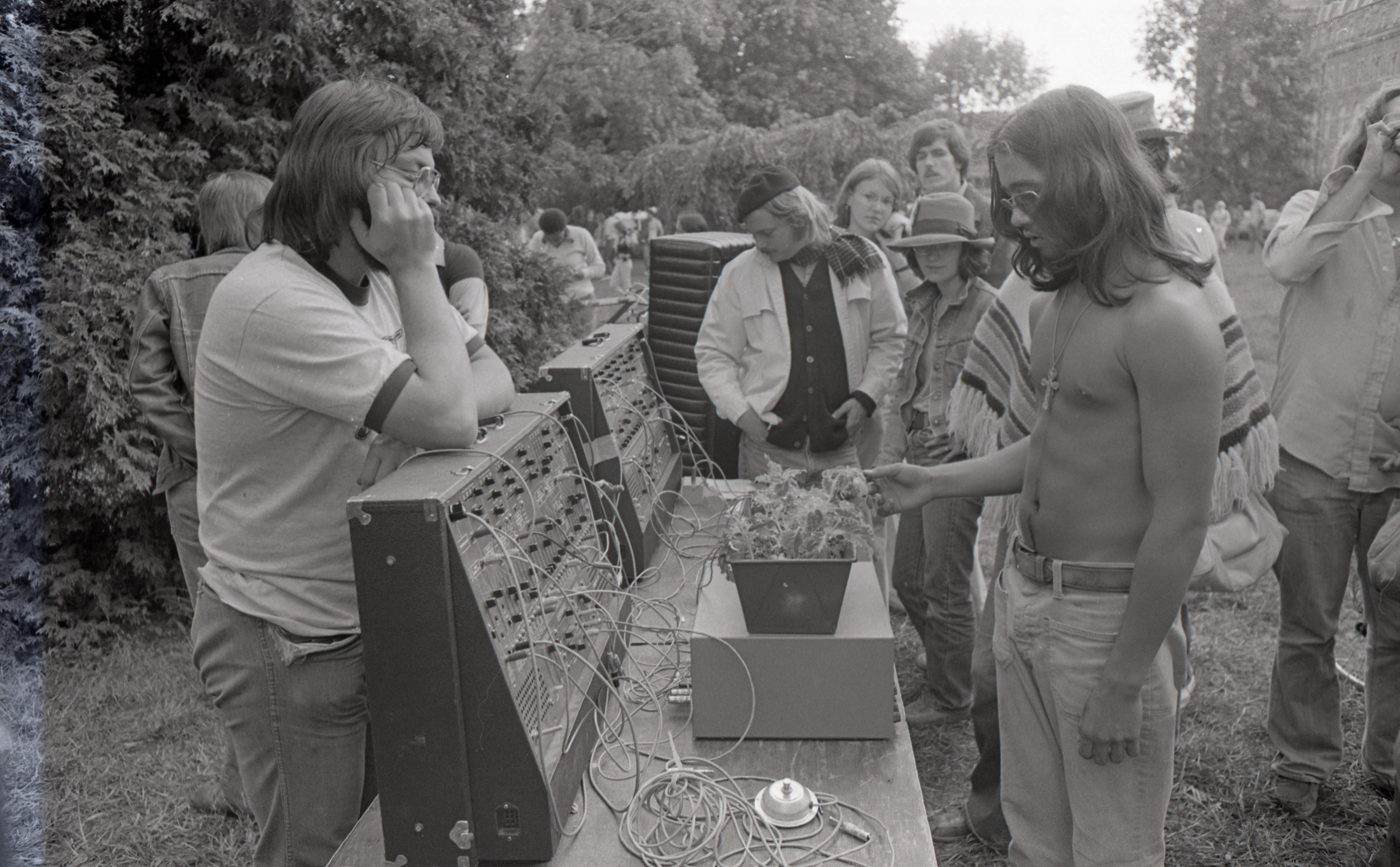
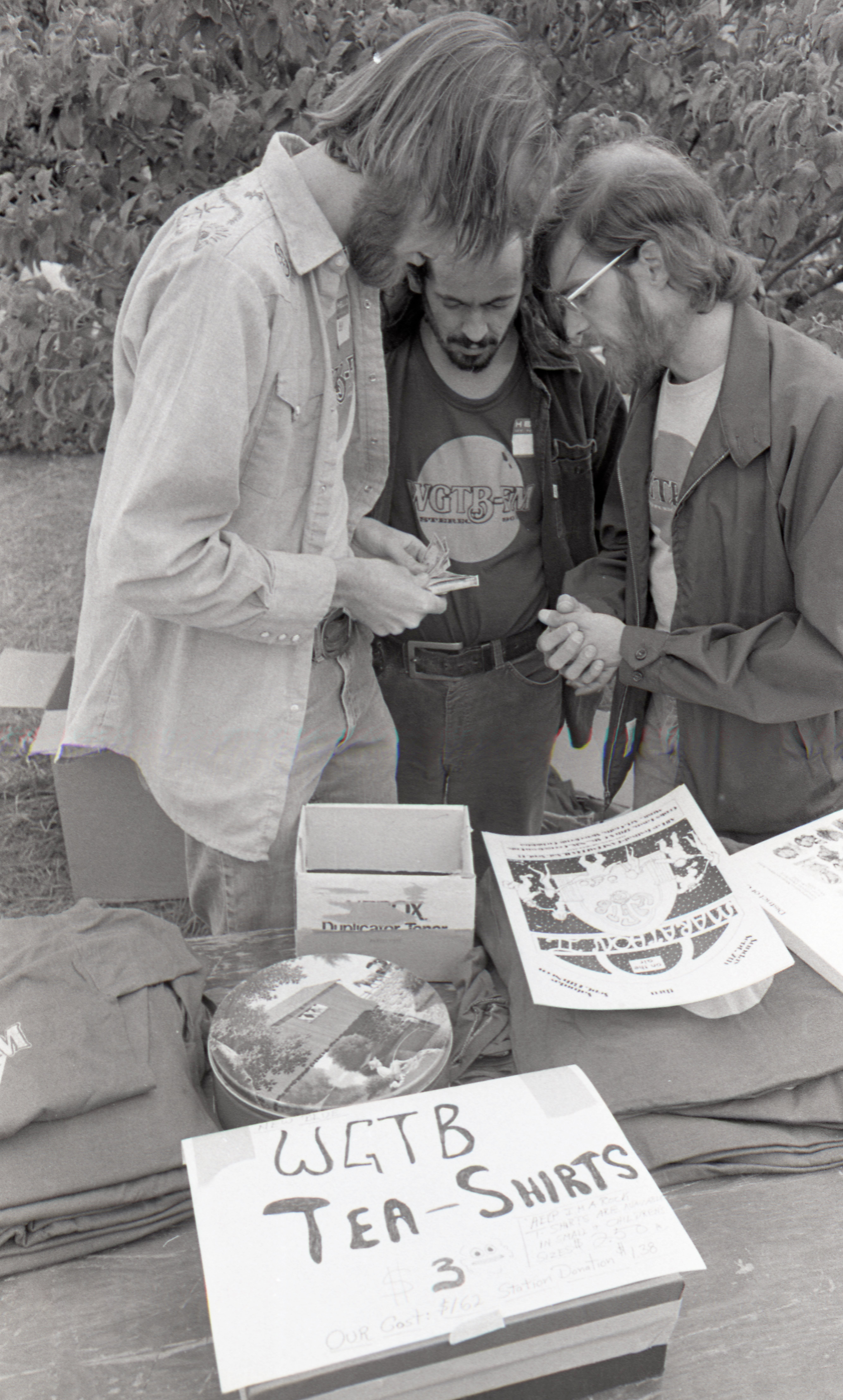
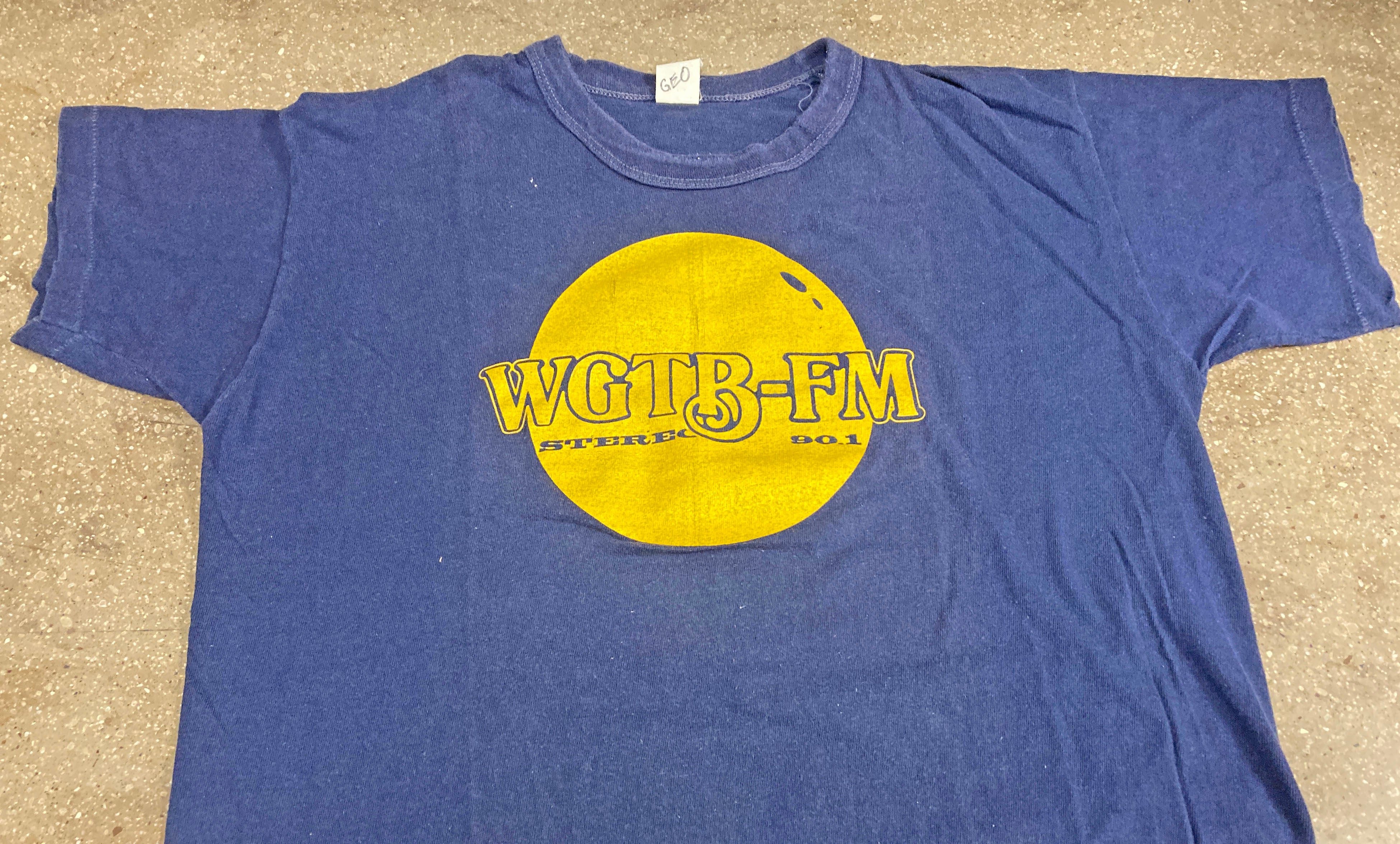
Pandamedia, September 13, 1975: Photographs and T-shirt sold at the event
In 1975, WGTB hosted the Pandamedia Festival, a musical fundraising event headlined by progressive rock band Happy the Man. The event was a success, netting over $35,000.
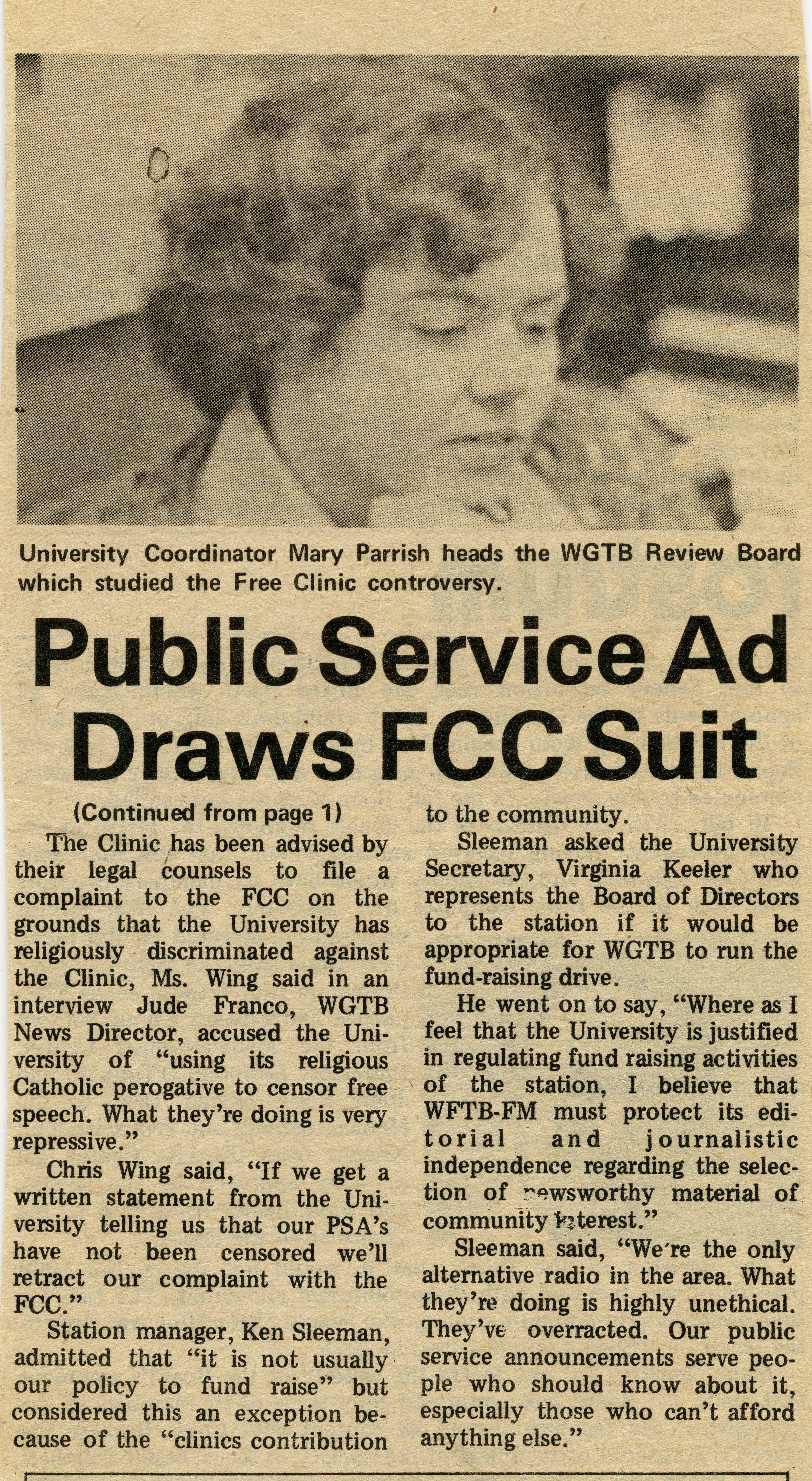
“Public Service Ad Draws FCC Suit.” The Hoya, December 5, 1975
WGTB and the Georgetown administration butted heads over the station’s increasingly left-wing focus. The climax of these tensions can be seen in the Washington Free Clinic controversy, where students advertised the services of a local abortion clinic, bringing a FCC suit and University crackdown.
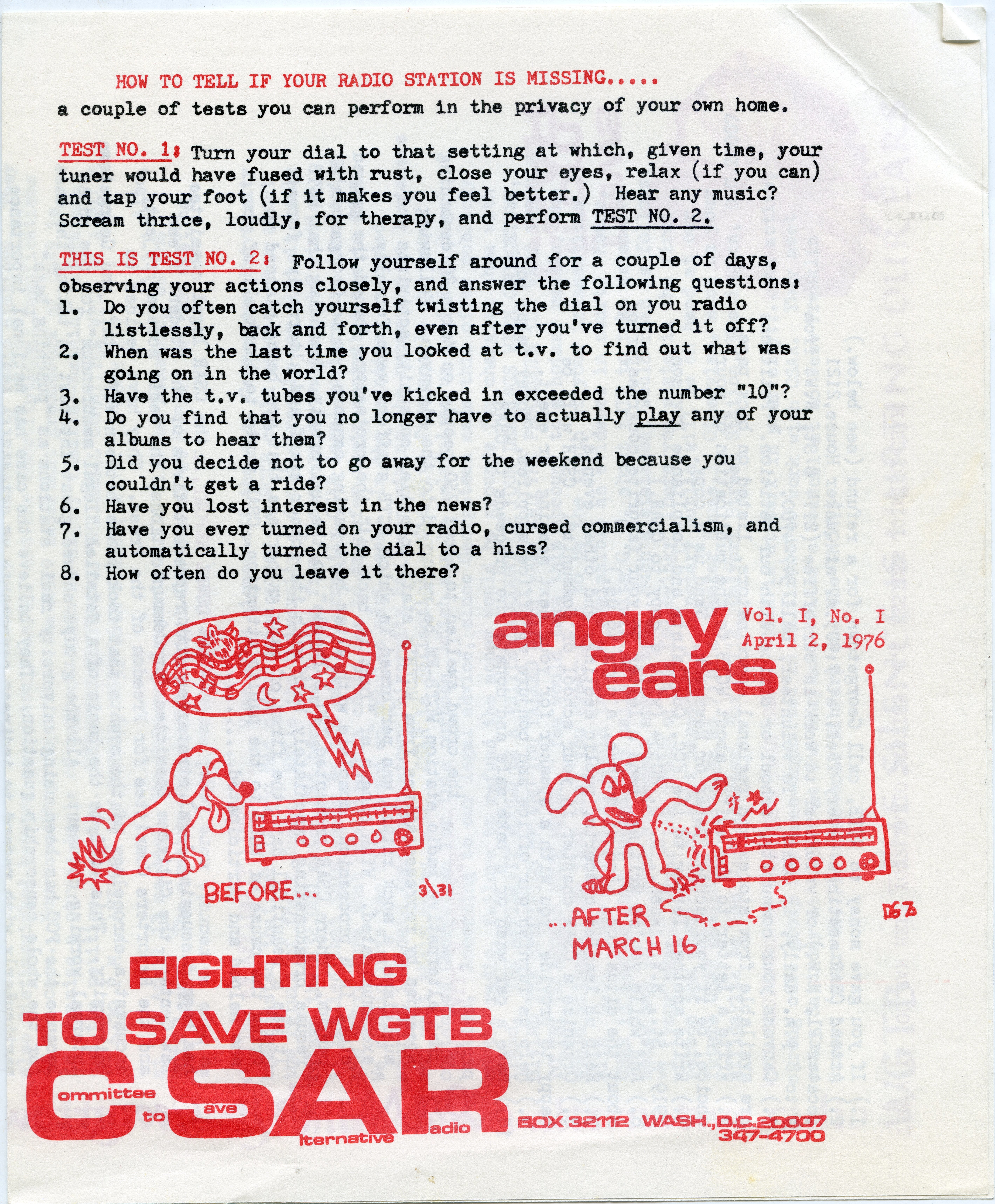
Angry Ears, volume I, number I, April 2, 1976. Gift of W. Royal Stokes
Angry Ears was the newsletter of the Committee to Save Alternative Radio (CSAR). CSAR emerged in April 1976, protesting a WGTB shutdown that began on March 16. The University stated that the closure, which lasted until June 16, was intended for station reorganization, hiring a new general manager and updating technology.
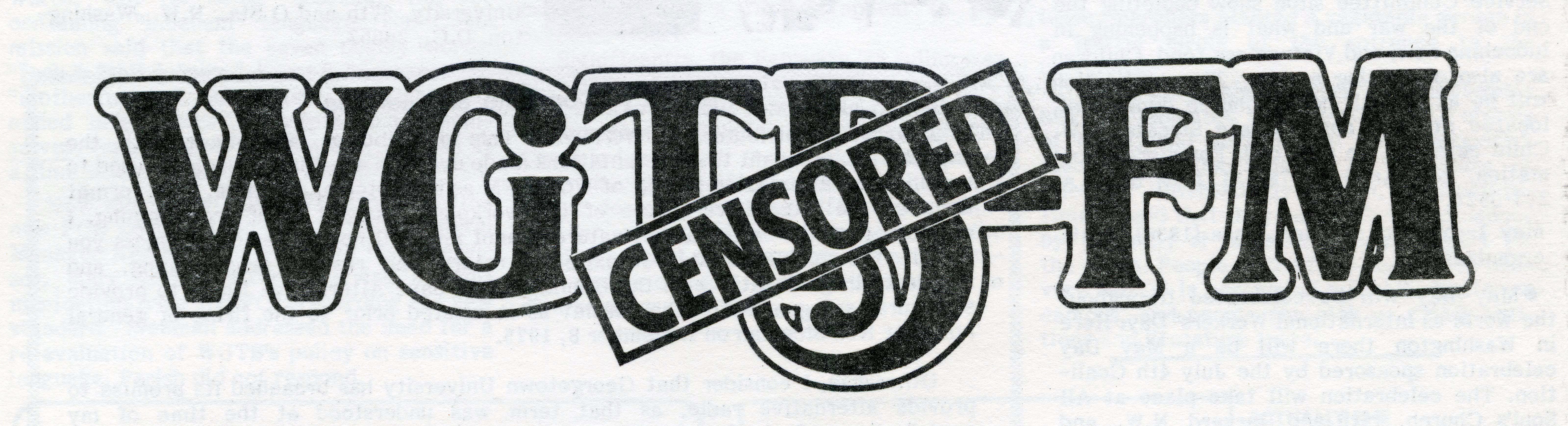
Graphic from Angry Ears, volume 1, number 2, April 20 [1976]. Gift of W. Royal Stokes
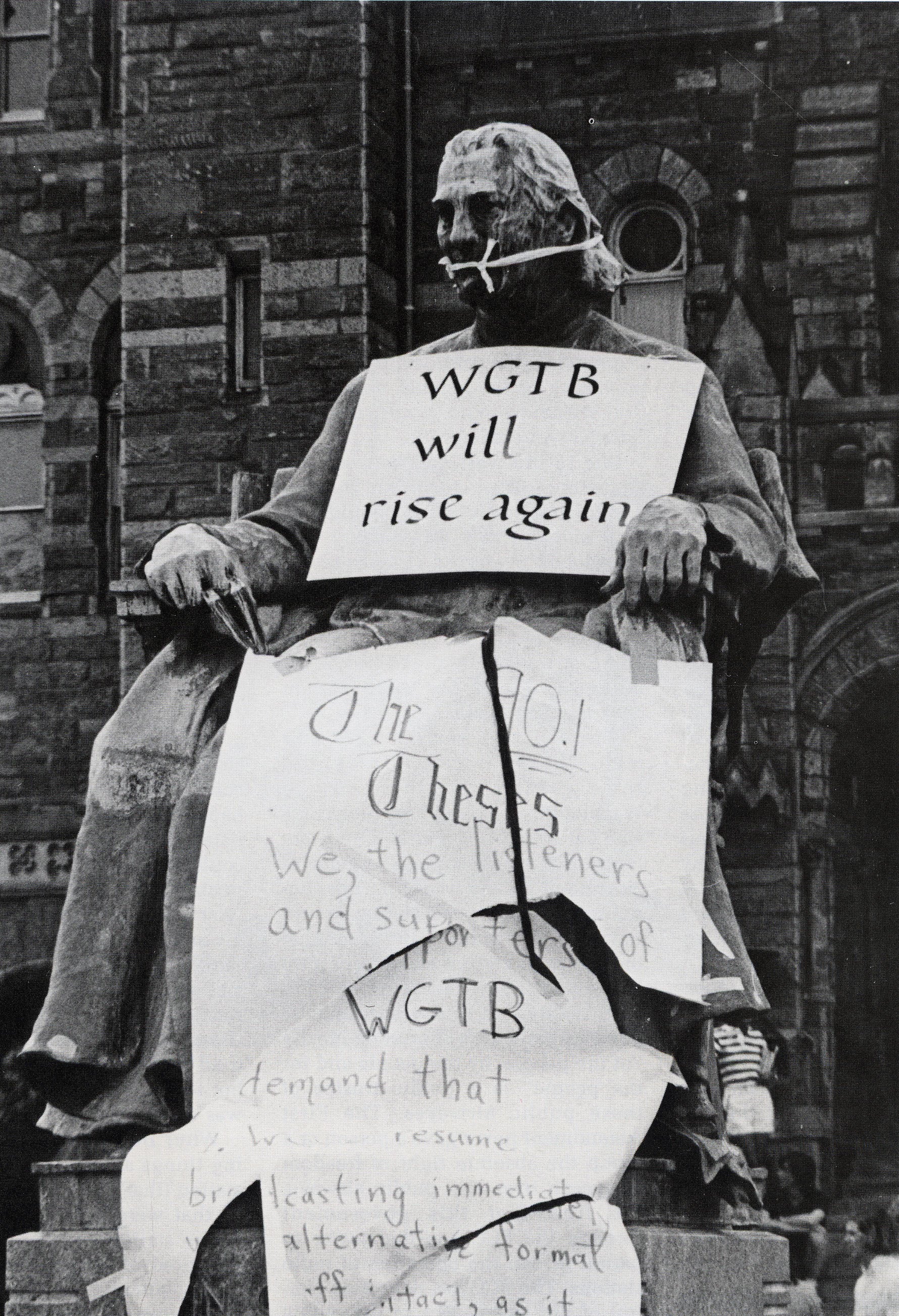
Sign protesting the three-month WGTB shutdown. Ye Domesday Booke, 1976
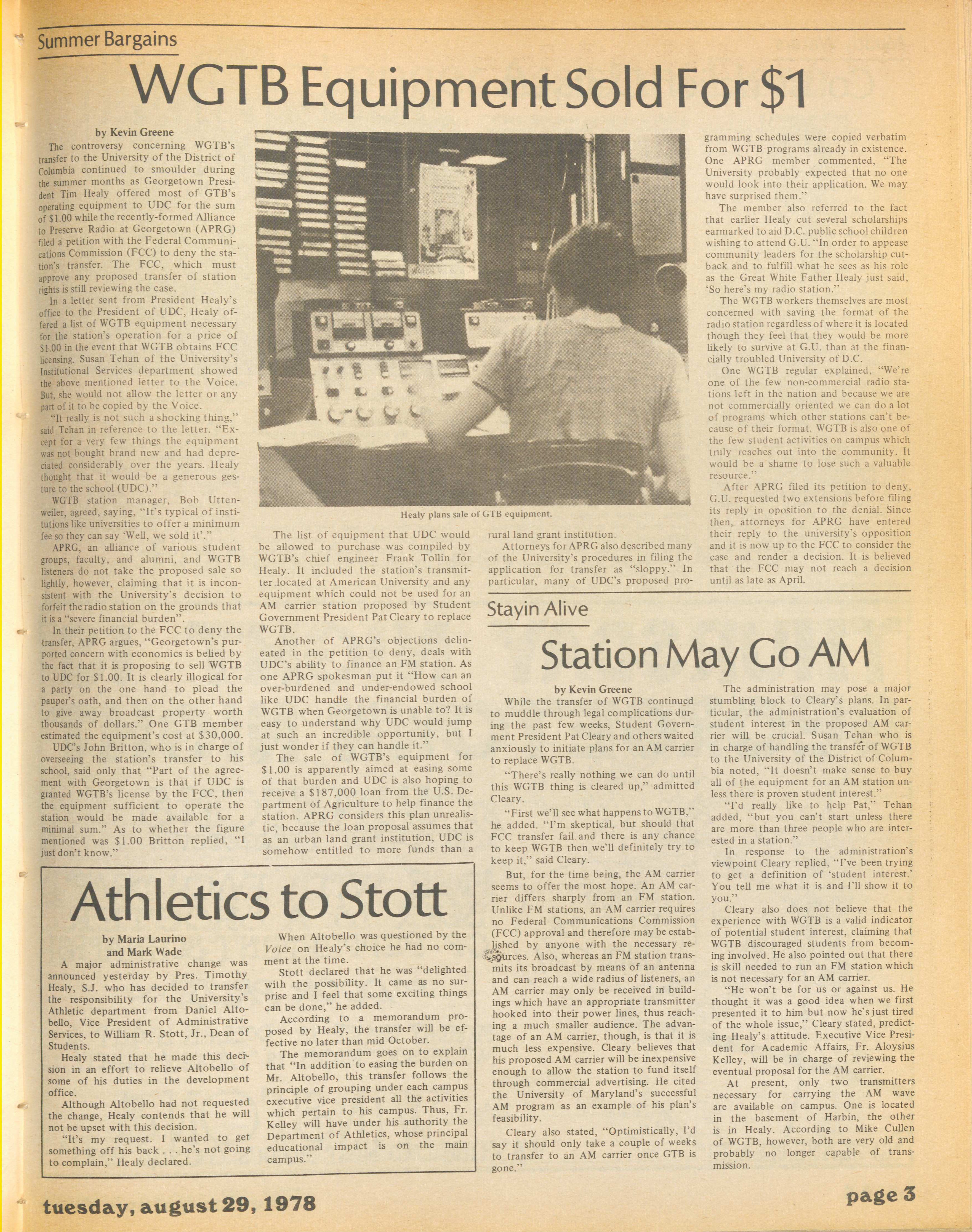
“WGTB Equipment Sold for $1” by Kevin Greene. Georgetown Voice, August 29, 1978
In fall 1978, Georgetown asked the Federal Communications Commission to assign WGTB’s FM license to the University of the District of Columbia. The University also transferred an estimated $40,000 worth of equipment. WGTB continued on air until its 1978-1979 budget ran out.
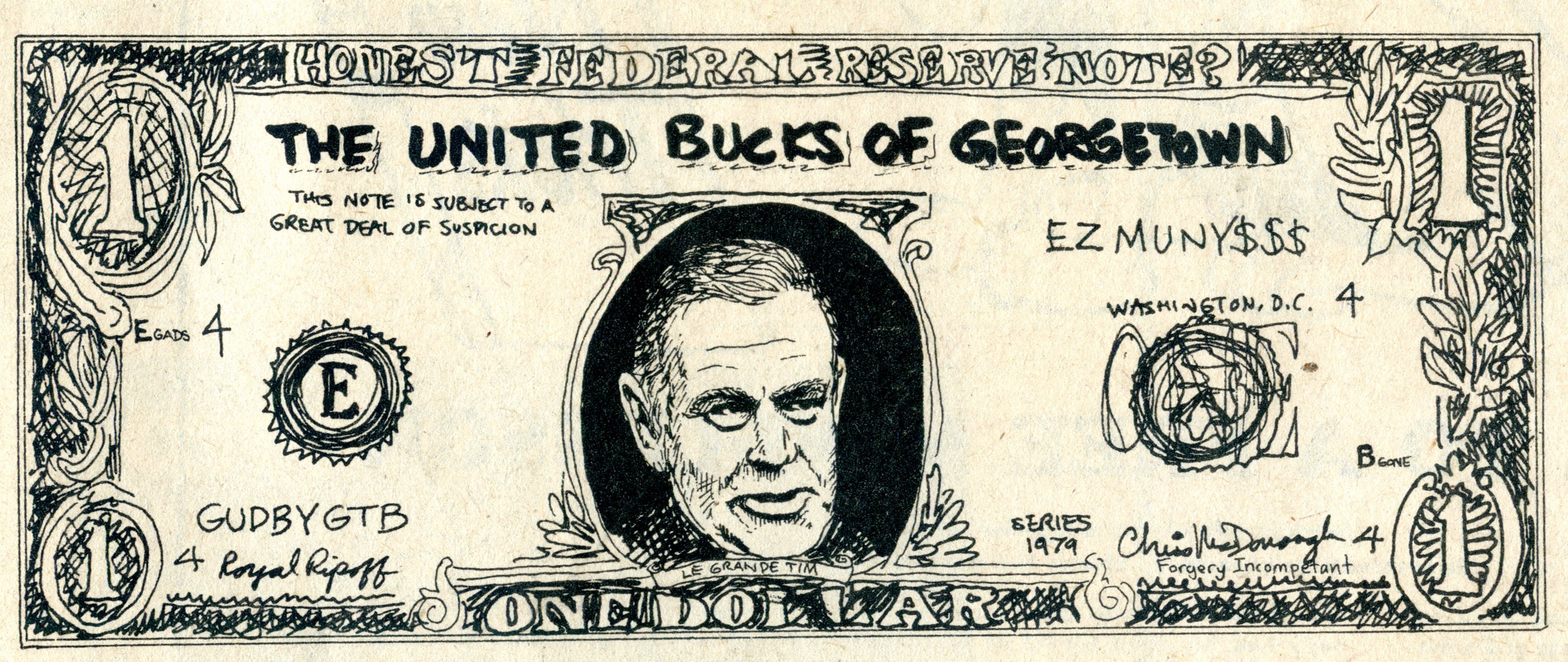
Graphic in the Georgetown Voice, January 20, 1979
The WGTB-FM license was officially transferred to the University of the District of Columbia in January 1979 for the nominal fee of $1.
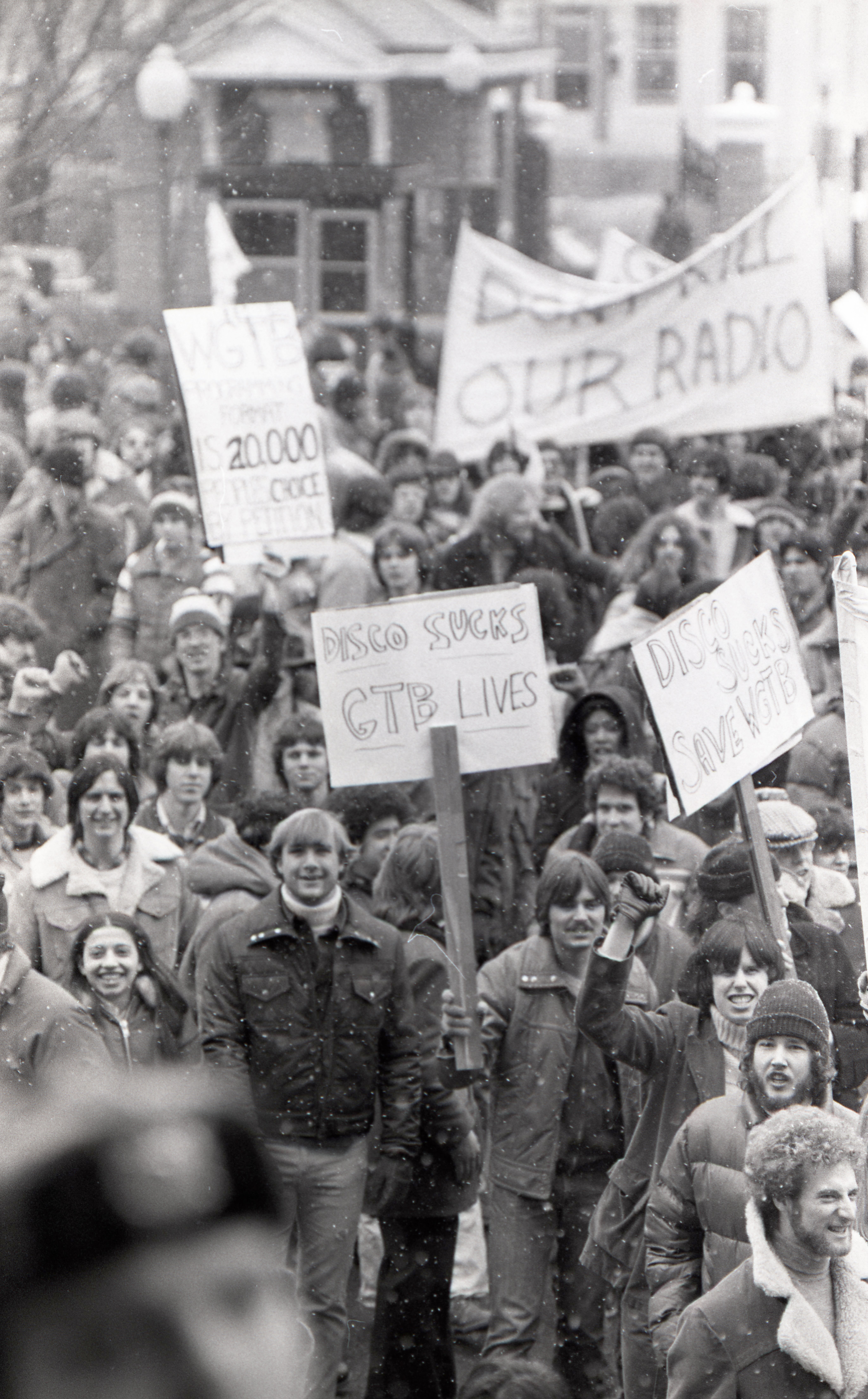
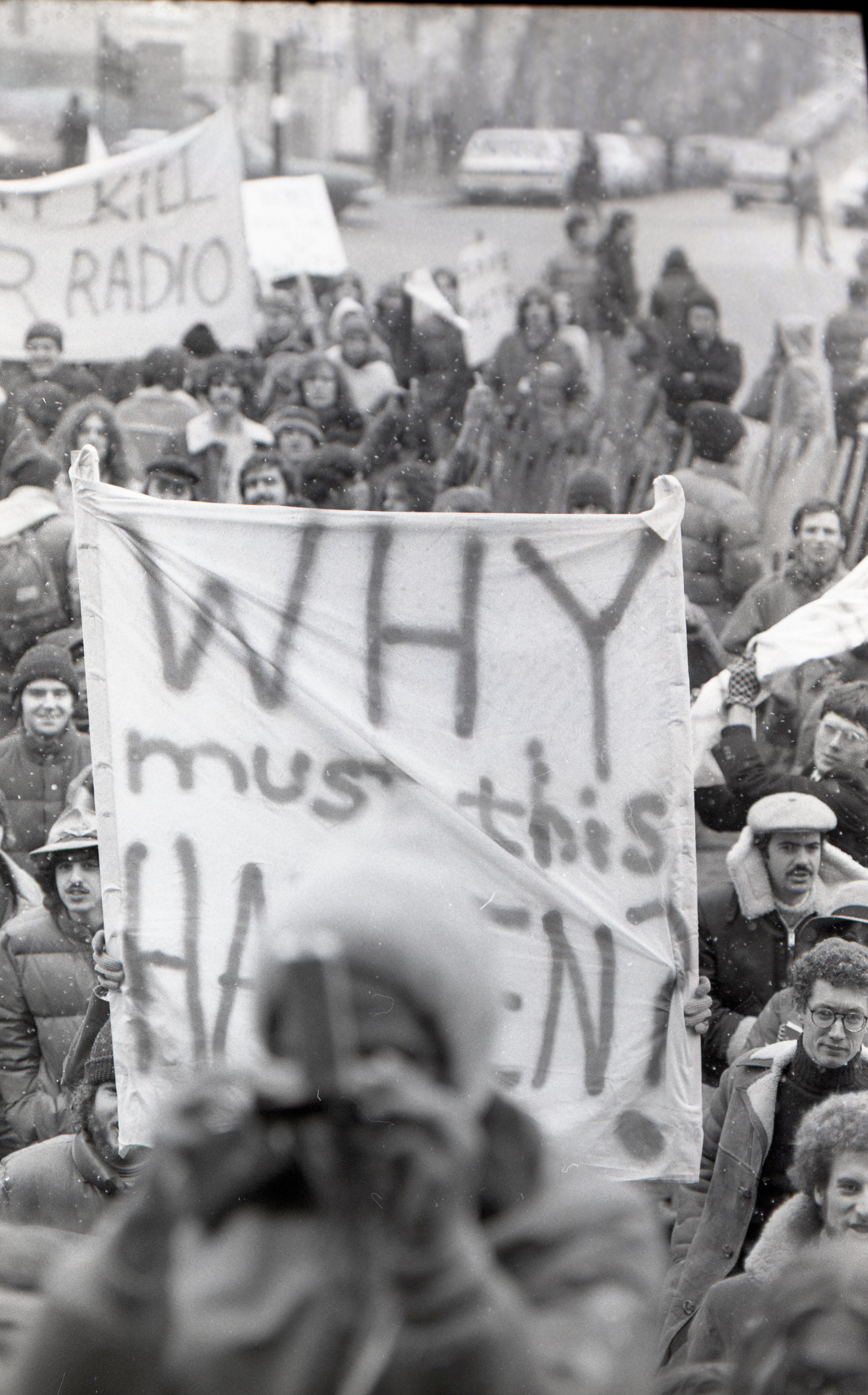
WGTB protests, January 31, 1979. University Photographer’s Files
Hundreds of students unsuccessfully protested WGTB’s closing at a rally in Healy Circle on January 31, 2979. The protestors carried signs with slogans such as Why Must This Happen and Disco sucks.
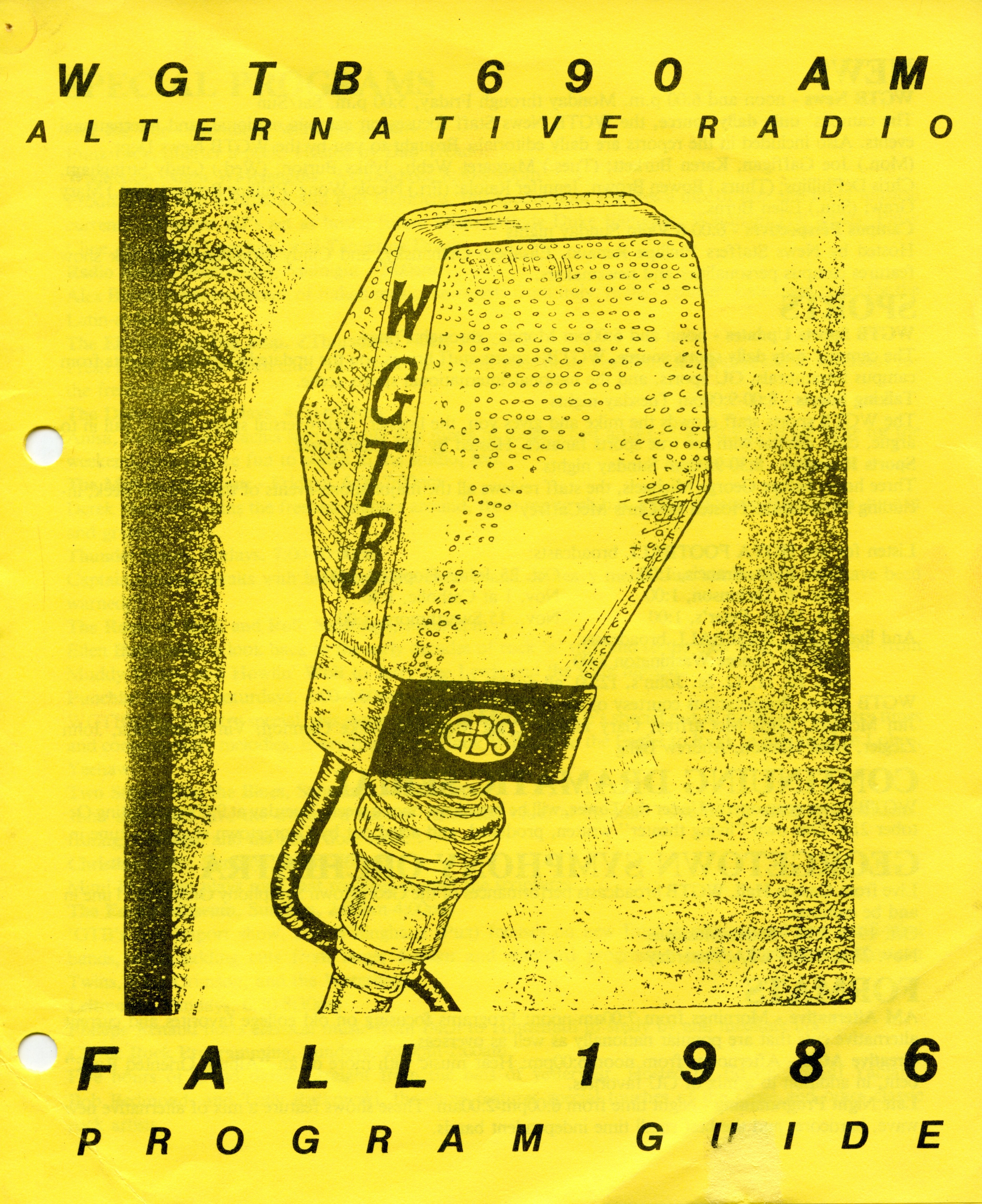
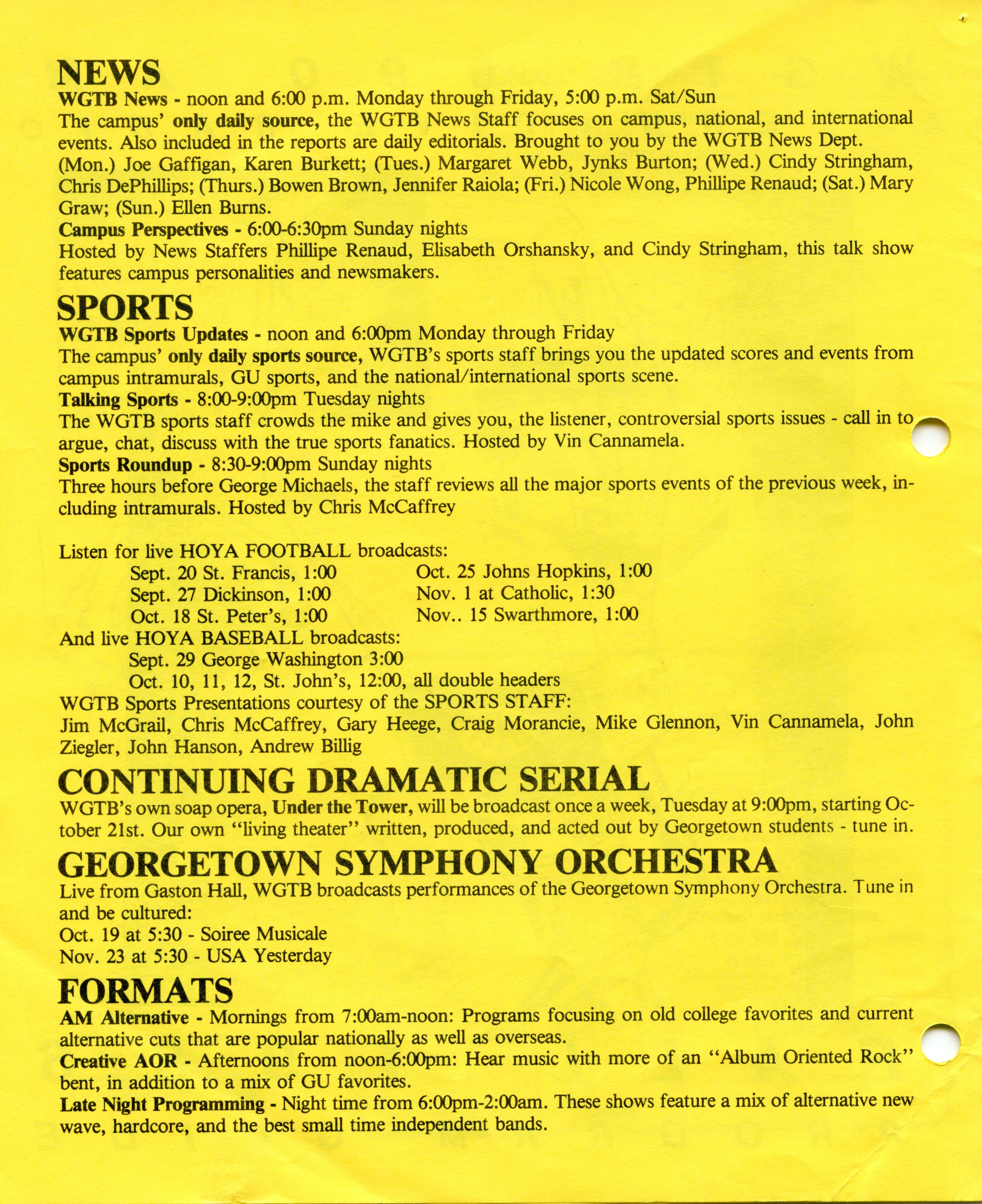
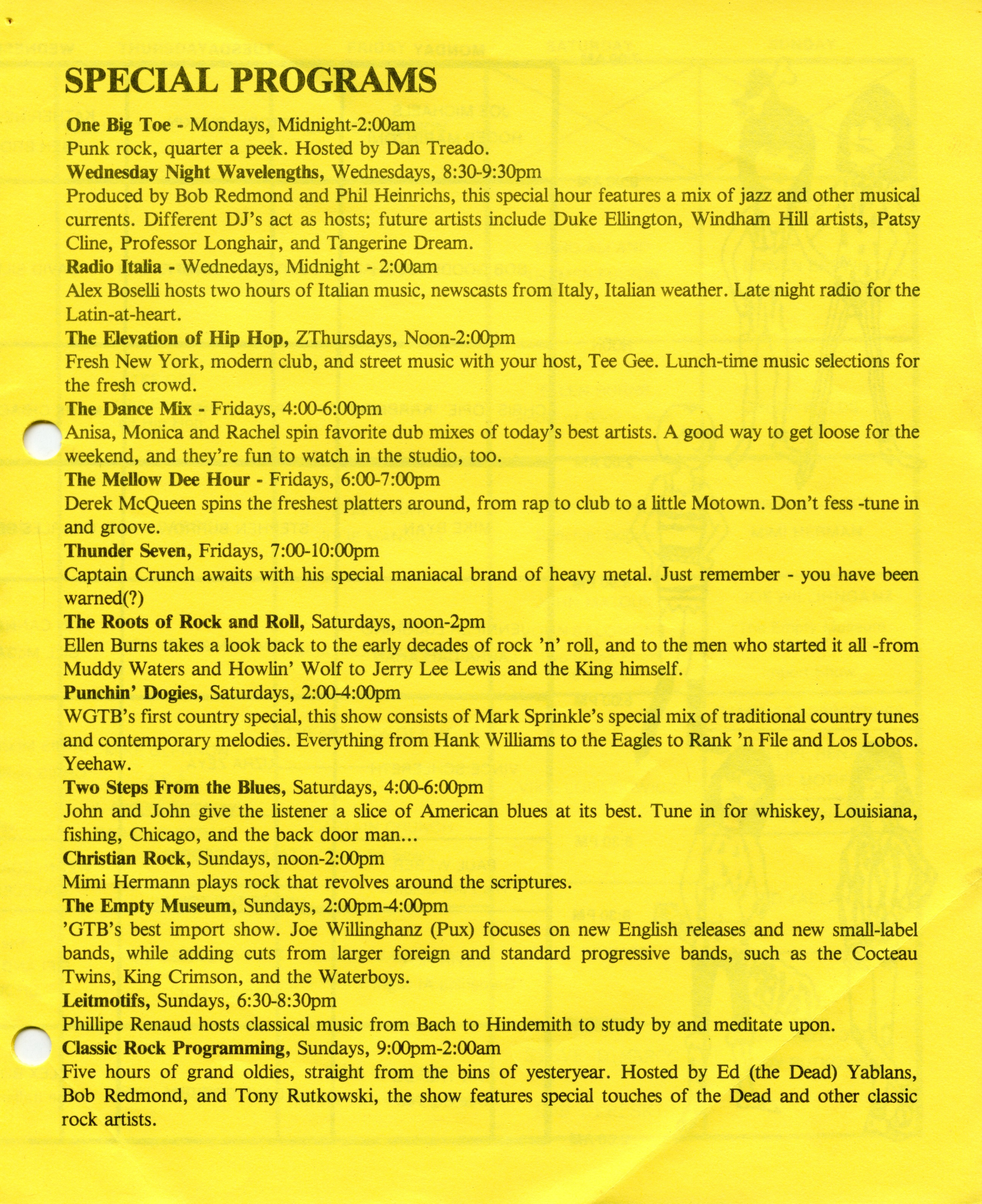
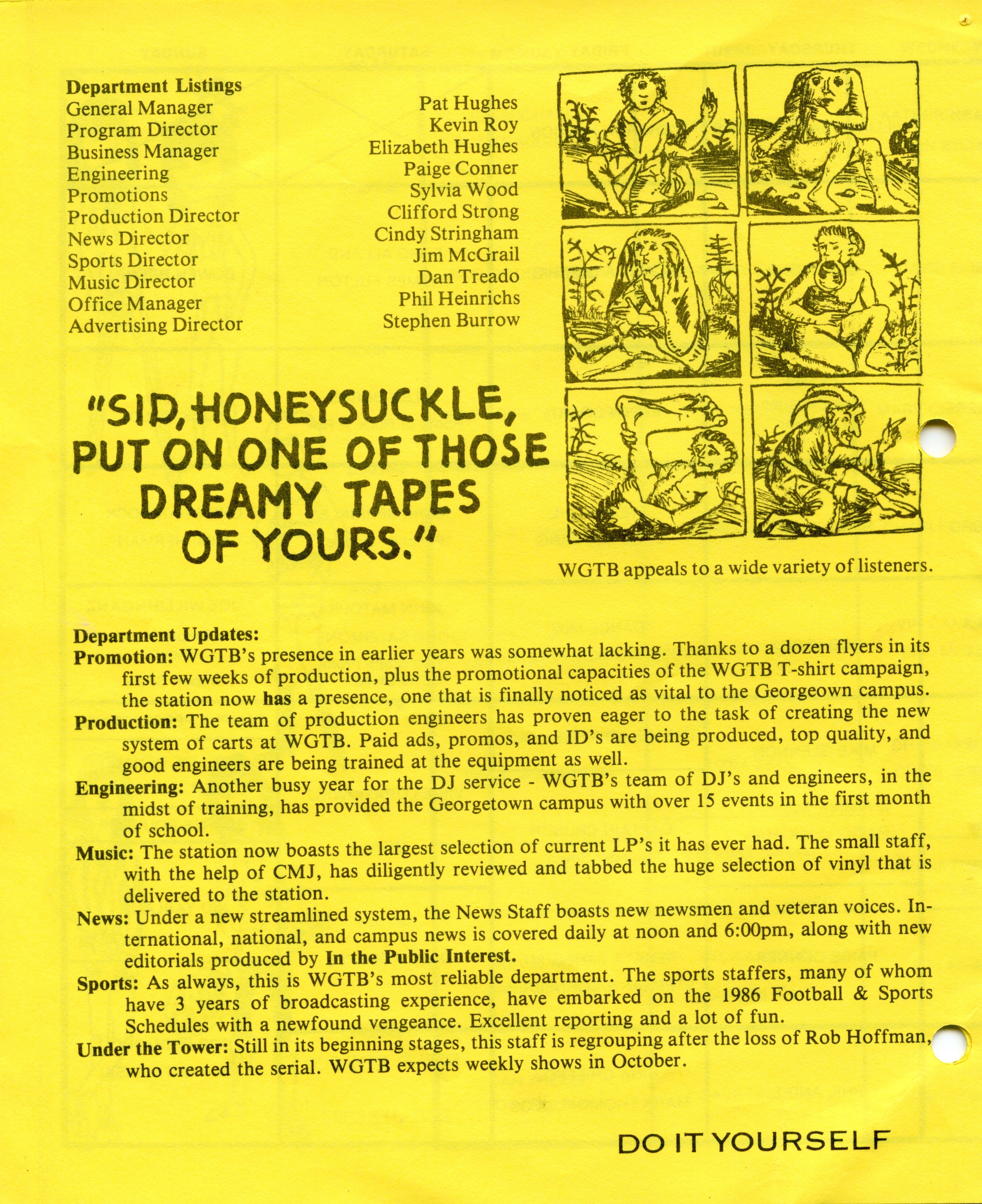
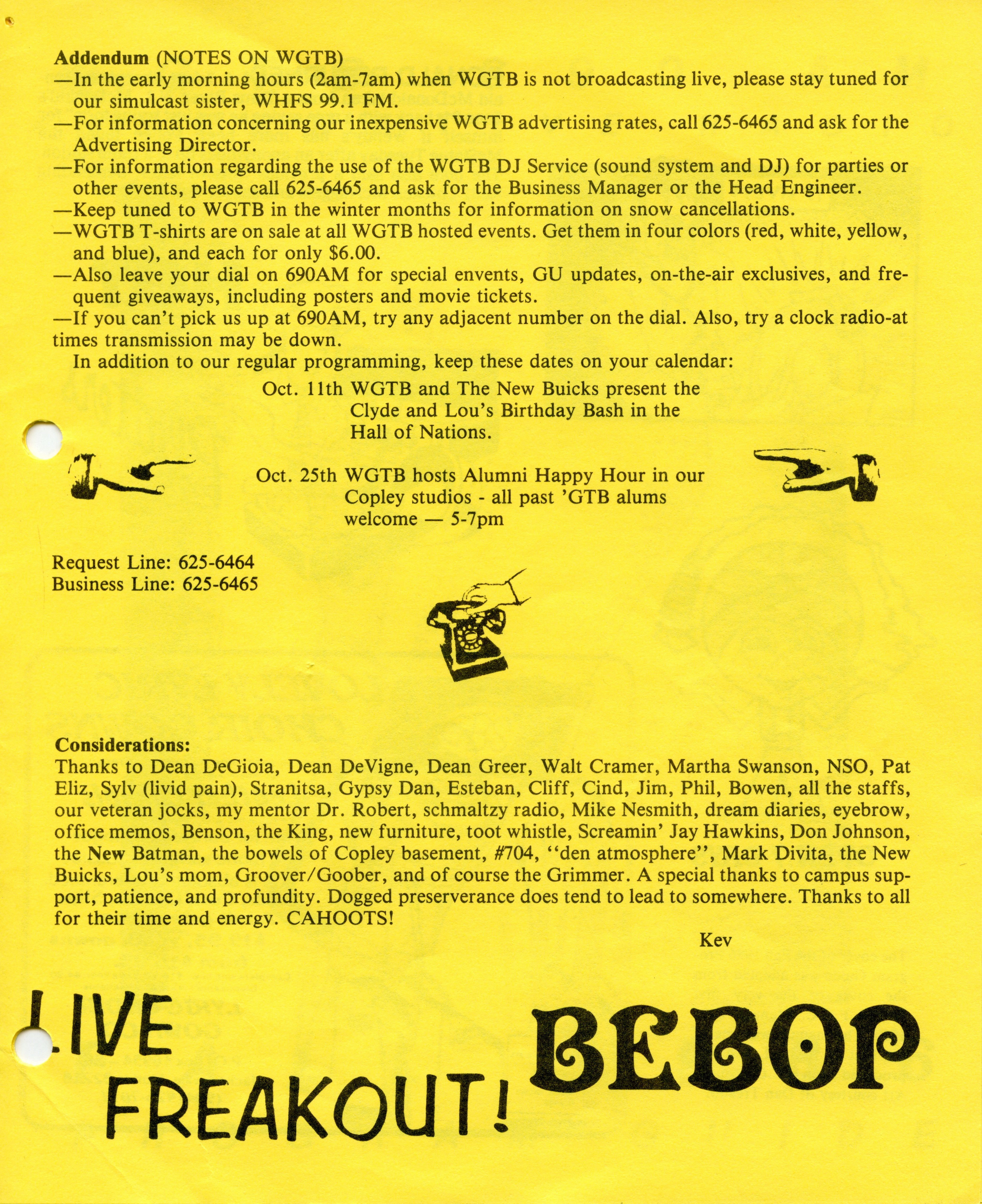
WGTB 690 AM Alternative Radio: Fall 1986 program guide
Campus radio was resurrected in 1982 with WROX-AM, an album-oriented rock format station broadcasting to individual campus buildings over carrier current at 690 AM. The station reverted to the WGTB call sign in 1985 and moved to an alternative format.
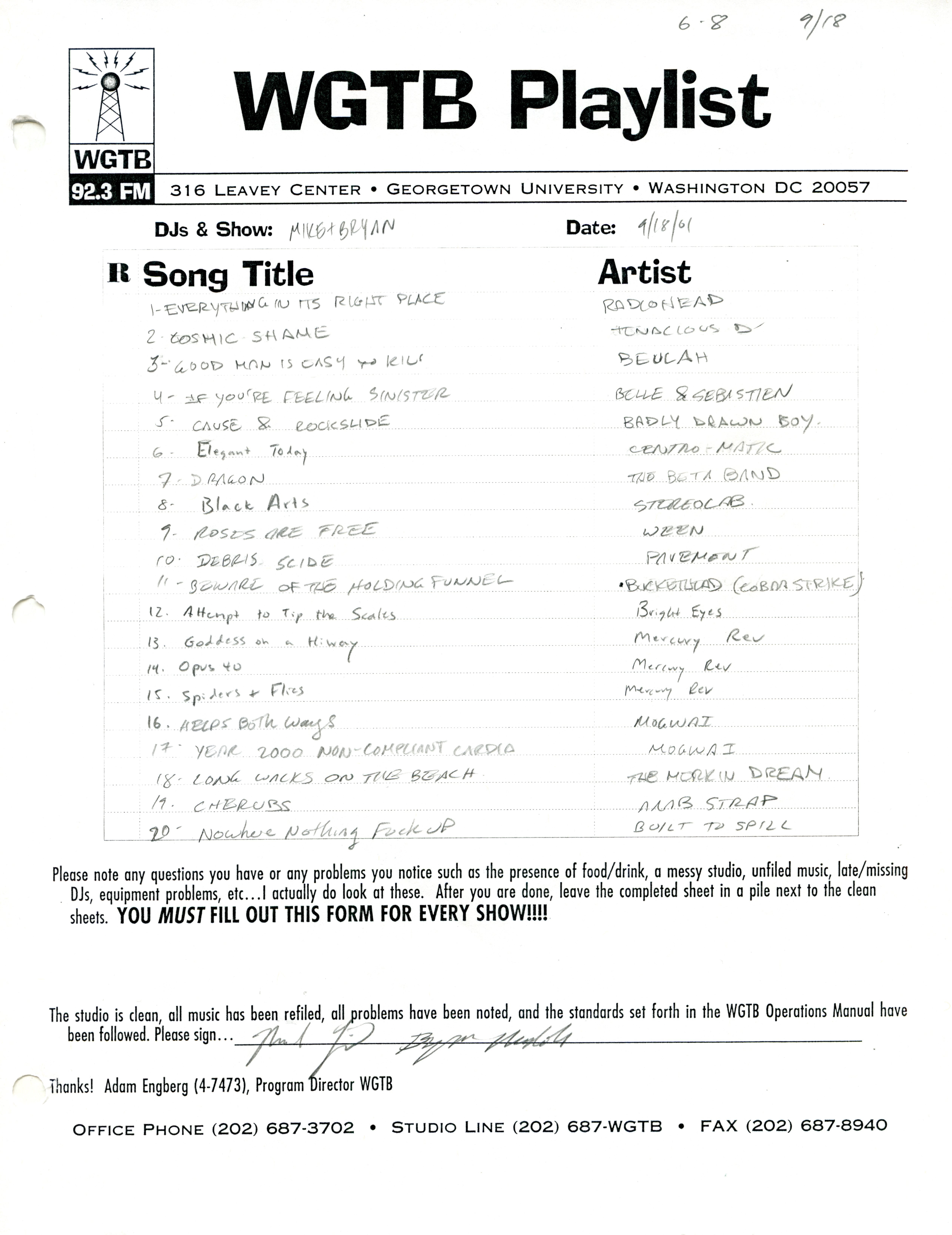
Mike and Bryan Show playlist, September 18, 2001
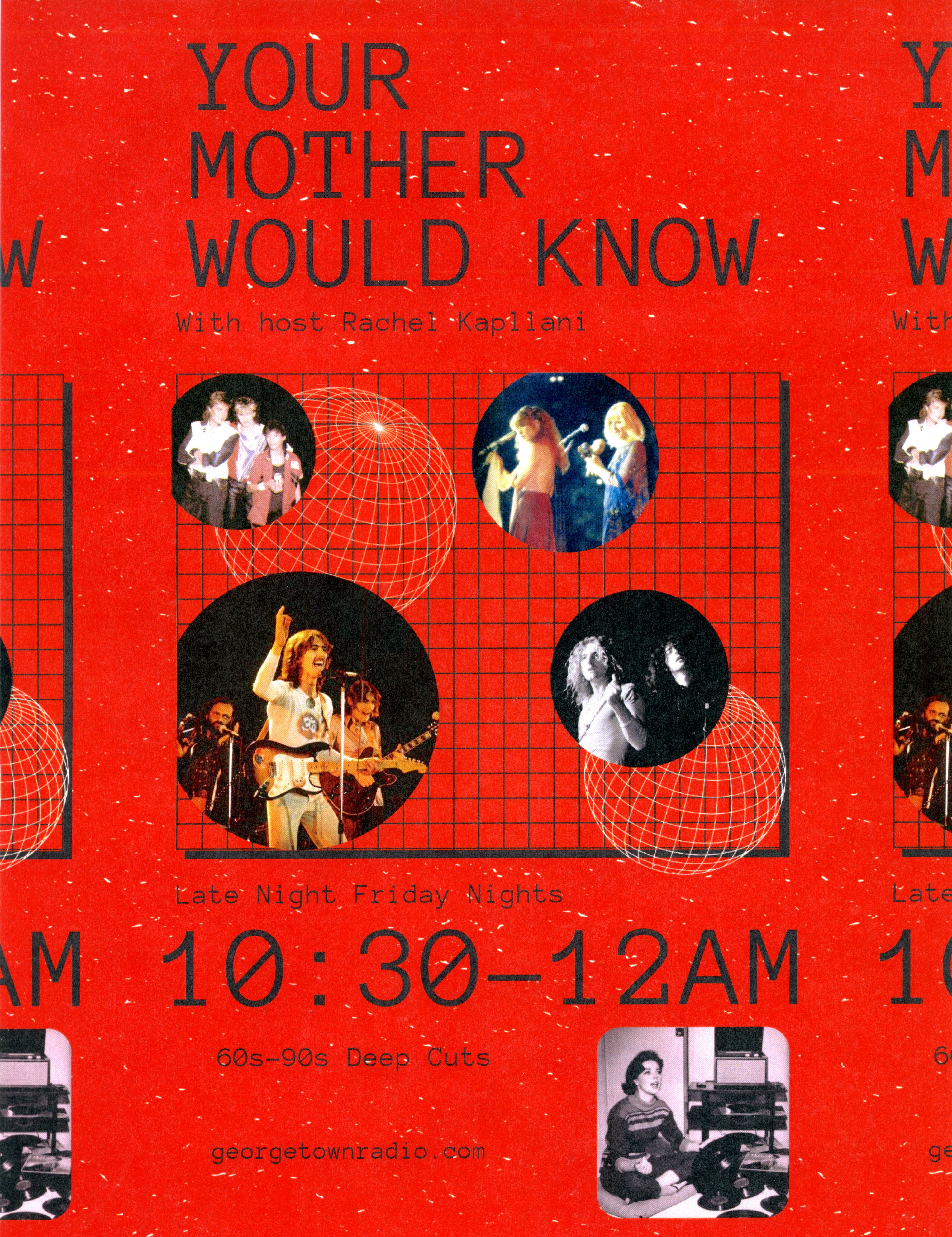
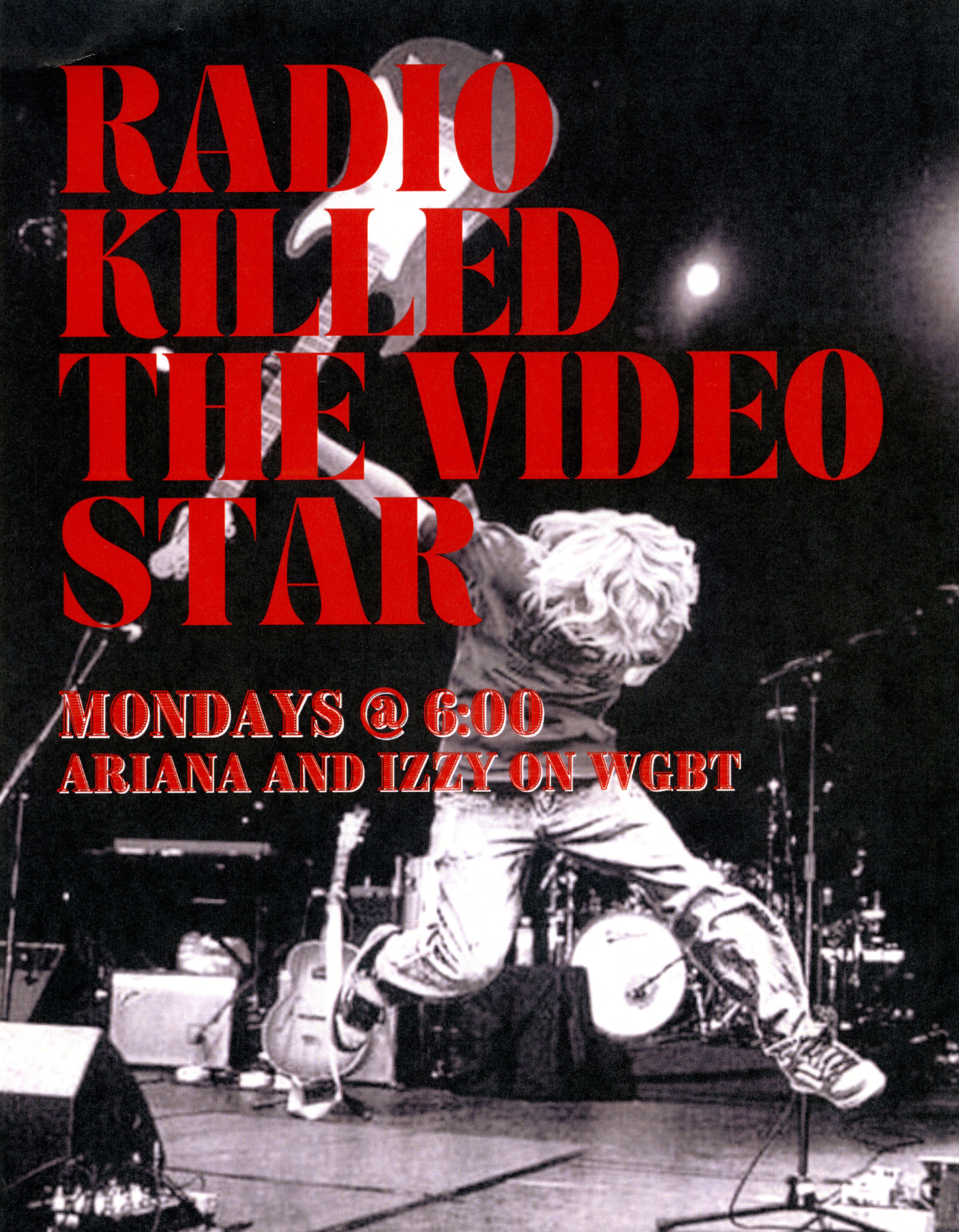
WGTB Flyers, spring 2025
Curated by Theodora Barassi (SFS’26)